- The Deep View
- Posts
- AI's compute crisis has reached a breaking point
AI's compute crisis has reached a breaking point

The Deep View
April 15, 2026

Hello, friends. Nvidia is seeding the future of quantum computing with open models, a familiar playbook that could secure its role in the next infrastructure wave. At the same time, Anthropic is reshaping Claude Code around agent multitasking, signaling how quickly developer workflows are shifting toward running many tasks in parallel to drive new levels of speed and productivity. But the bigger story may be constrained: AI’s growth is now colliding with reality. A surge in agent usage, tightening hardware supply, and geopolitical disruption are converging to deepen the compute crisis. We may be entering a different phase of AI, where progress is no longer limited by ideas but by the systems required to power them. Hopefully, this reality is temporary. —Jason Hiner
1. AI's compute crisis has reached a breaking point
2. Anthropic gives Claude Code a multi-agent upgrade
3. Nvidia bets on open models to advance quantum
BIG TECH
How agents deepened AI's compute crisis

The talk about AI being a bubble-driven hype cycle has largely stopped. Now the problem is that it can't keep up with demand.
A perfect storm of factors has conspired against the AI industry, turning its compute shortage into an emerging crisis:
The war in Iran is disrupting tech products: The conflict is snarling global supply chains and threatening to unleash a new wave of inflation. One of the key elements of the semiconductor supply chain, helium, is a victim of the crisis. And that could affect many tech products, including those needed to build AI data centers. A prolonged conflict will continue to impact oil prices, driving inflation in logistics, shipping, and travel needed for the tech ecosystem to thrive.
AI agents are gobbling up tokens: The boom in AI agents over the past 90 days has triggered insatiable demand for inference, also known as the tokens needed to run AI queries and tasks. The Wall Street Journal reported that OpenAI's token demand jumped from 6 million per minute in October 2025 to 15 billion per minute in March. Never mind the fact that many of those tokens are being used inefficiently by users and their agents, as OpenAI's Peter Steinberger alluded to this week.
GPU, memory, and storage are scarce: Even before the recent supply disruptions, the tech industry had been facing a deepening shortage of GPUs, memory chips, and storage drives, all key components needed to build the machines that run AI. The shortages are now leading to price hikes, which could price out startups and leave AI industry giants gobbling up most of the components. Case in point: the Ornn Compute Price Index estimates that the cost of an hour of Nvidia GPU time has increased by 48 percent in the past months alone.
All of this is happening against the backdrop of Anthropic announcing Mythos, its most powerful model ever, while initially limiting access to a small number of partners. And OpenAI is preparing to launch its Spud model, which is also considered a step change, prompting the company to release a policy paper to spark public debate about the AI's impact on jobs and societal well-being.
Anthropic has chalked up its motivation not to release Mythos more broadly to cybersecurity risks, claiming the model is "too powerful." I believe it's also clear that the company does not have the compute to run it.

I recently heard directly from an executive at one of the AI frontier labs that every time the company releases a new model with greater capabilities, usage spikes because people can do more with it. Anthropic's Claude has already been buckling under the demand of a new influx of users since its February showdown with the Pentagon. There's no way that it's ready to give users rocket fuel to do more with Mythos. And that puts Anthropic and all of the AI labs in a tricky spot as they prepare to grow in the months ahead. There are no guarantees that the conflict in Iran will be resolved soon, but even if it is, the agent situation and the shortage of key components are likely to continue to limit AI's growth options. What will that mean? I expect we'll be talking about that a lot in the days ahead. You can follow my updates in real-time on Twitter/X.

TOGETHER WITH ORACLE NETSUITE
Unleashing AI's Value in Finance

As AI reshapes the world of finance, the need for CFOs to strategically harness AI has never been greater.
AI expert Glenn Hopper outlines a clear roadmap for deploying AI in his latest guide.
Download your copy now to learn how to leverage AI’s potential—no computer science or engineering background required!
PRODUCTS
Anthropic gives Claude Code a multi-agent upgrade
The AI race moves fast, but frontier labs move faster. Google DeepMind, OpenAI, and Anthropic all made big news on Tuesday, with Anthropic doing so twice.
Anthropic redesigned Claude Code on the desktop, now tailoring the interface to better accommodate running parallel agents and tasks. The changes include a new sidebar for managing multiple sessions, a drag-and-drop rearranging feature, and an integrated terminal and file editor.
The sidebar surfaces all active and recent sessions, letting developers easily navigate across repositories, filter by status, project, or environment, and group related sessions together. When a session's associated pull request merges or closes, it automatically drops off the sidebar, keeping the view focused on what's still in progress.
As Claude Code cements its position as the leading agentic coding environment, seamless window management has become a necessity for developers juggling increasingly complex, multi-threaded workloads. It's a shift Anthropic elevated in its blog post:
"For many developers, the shape of agentic work has changed. You're not typing one prompt and waiting… The new app is built for how agentic coding actually feels now: many things in flight, and you in the orchestrator seat."
Other elements of the redesign focus on bringing more to users within the app, including:
View modes: Verbose, Normal and Summary options allow users to decide how much they want to see of the actual process, with the option to just see results.
Keyboard shortcuts: New shortcuts make it easier to get things done, and users can press [⌘ + / ] or [Ctrl + /] to see the full list
Speed: The app was rebuilt for reliability and speed, according to Anthropic
Parity with CLI Plugins: The desktop app now fully supports CLI plugins and SSH connections to remote machines for a more familiar experience, including Mac
The DeepView CEO, Faris Kojok, tested all the features and found the new UI/UX more refined and easier to navigate. In particular, he found View Modes to be helpful.
“Being able to switch the transcript mode from Verbose to Normal to Summary allows me to get just the high-level response and then dive deeper with Verbose if necessary,” said Kojok.
Anthropic also released Claude Code Routines in research preview, which allows users to automate a session by configuring it once and then running it on a schedule, via an API call or an event trigger. The week before, Anthropic released Claude Managed Agents and an Advisor tool.
Anthropic’s slew of releases focused on Claude Code, which makes sense for several reasons. Primarily, it aligns perfectly with Anthropic’s goal of best serving its enterprise audience, and this product is one of its biggest profit generators at the moment. More interestingly, though, it seems the company could be strategically positioning itself to better compete with OpenAI, which is rumored to be developing a superapp that would merge Codex, Atlas and the ChatGPT app. That would enable OpenAI to combine the strongest features of all the apps into a single hub, including the ability to run Codex agents in multiple Atlas browser tabs. Since Anthropic doesn't have a browser, its latest Claude Code update addresses the same need for agentic multitasking.

TOGETHER WITH ATTIO
Attio: The AI CRM Built for Modern Businesses
Attio is the AI CRM you can actually build on. Connect your AI tools, customize it to how your team works, and let it act on every signal it finds.
With Universal Context, Attio's intelligence layer, your agents always have the context they need to move things forward, instantly.
Ask more from CRM. Ask Attio.
BIG TECH
Nvidia bets on open models to advance quantum
Quantum isn’t ready for the big leagues yet, but Nvidia thinks it can help.
On Tuesday, the chip giant debuted Ising, a family of open models that aim to speed up the development of useful, scalable quantum computers. In a press release, Nvidia claims that Ising offers “the world's best AI-based quantum processor calibration capabilities" with error correction decoding 2.5 times faster and three times more accurate than conventional methods.
In a statement, Nvidia CEO Jensen Huang said that AI is “essential” to making quantum computing practical. “With Ising, AI becomes the control plane—the operating system of quantum machines—transforming fragile qubits to scalable and reliable quantum-GPU systems.”
The Ising family includes new models, tools and data to accelerate quantum development:
The Ising Calibration model is a vision language model that can interpret and react to measurements from quantum processors, with agents continuously calibrating quantum computers without downtime.
The Ising Decoding model, meanwhile, offers two variants of a 3D neural network that perform error correction in real time more than twice as fast as current industry standards.
The Ising models are already being put to use in research labs and institutions, including Harvard University’s school of engineering, Infleqtion, IQM Quantum Computers, Lawrence Berkeley National Lab and the UK National Physical Laboratory.
Nvidia’s addition to the quantum landscape marks a growing interest in the once-theoretical technology. Quantum, for instance, was a major focus of CES in January, with several sources telling The Deep View that quantum and AI will have a symbiotic relationship.
“I can foresee a world where a quantum processing unit, a QPU, would coexist alongside the GPU and the CPU,” Dr. Pouya Dianat, chief revenue officer of Quantum Computing Inc., told The Deep View at the time.
Quantum computing is still a finicky technology with a ton of roadblocks. However, Nvidia is putting its weight behind quantum and feeding the ecosystem the same way it feeds open models. By developing foundational systems that make this tech work better, Nvidia is embedding itself into the foundation of quantum computing long before the tech reaches maturity. And given the current compute shortage and quantum's potential to ease AI's energy burden, it might not be long before the industry at large starts to take the tech more seriously.

LINKS

OpenAI acquires Hiro Finance, a personal finance company founded in 2024
Novartis CEO Vas Narasimhan joins Anthropic’s Board of Directors
Anthropic opposes Illinois OpenAI-backed law that shields labs from liability
Microsoft to rent data center capacity from OpenAI in Norway
NBC Review finds Grok AI is still generating sexual deepfakes
AWS launches Amazon Bio Discovery for AI-powered research in life sciences

Granola: Our entire team switched to Granola and nobody went back. It captures your meetings without a bot, and the notes are actually worth reading. Try it free with code THEDEEPVIEW. (sponsored)
Claude Code: New Routines feature allows for repeatable routines
MAI-Image-2 Efficient: Microsoft’s new, cheaper and faster image model
Microsoft Word: Copilot now tracks changes, leaves comments, and more
Microsoft Copilot: Users can forward emails to Copilot and delegate work
Cursor: The automations feature now supports even-based triggers for Sentry

Meta: Computer Science Research - US - IC5
Anthropic: Research Engineer, Reward Models Platform
Baseten: Post-Training Research Scientist
Reflection: Member of Technical Staff - Post-Training

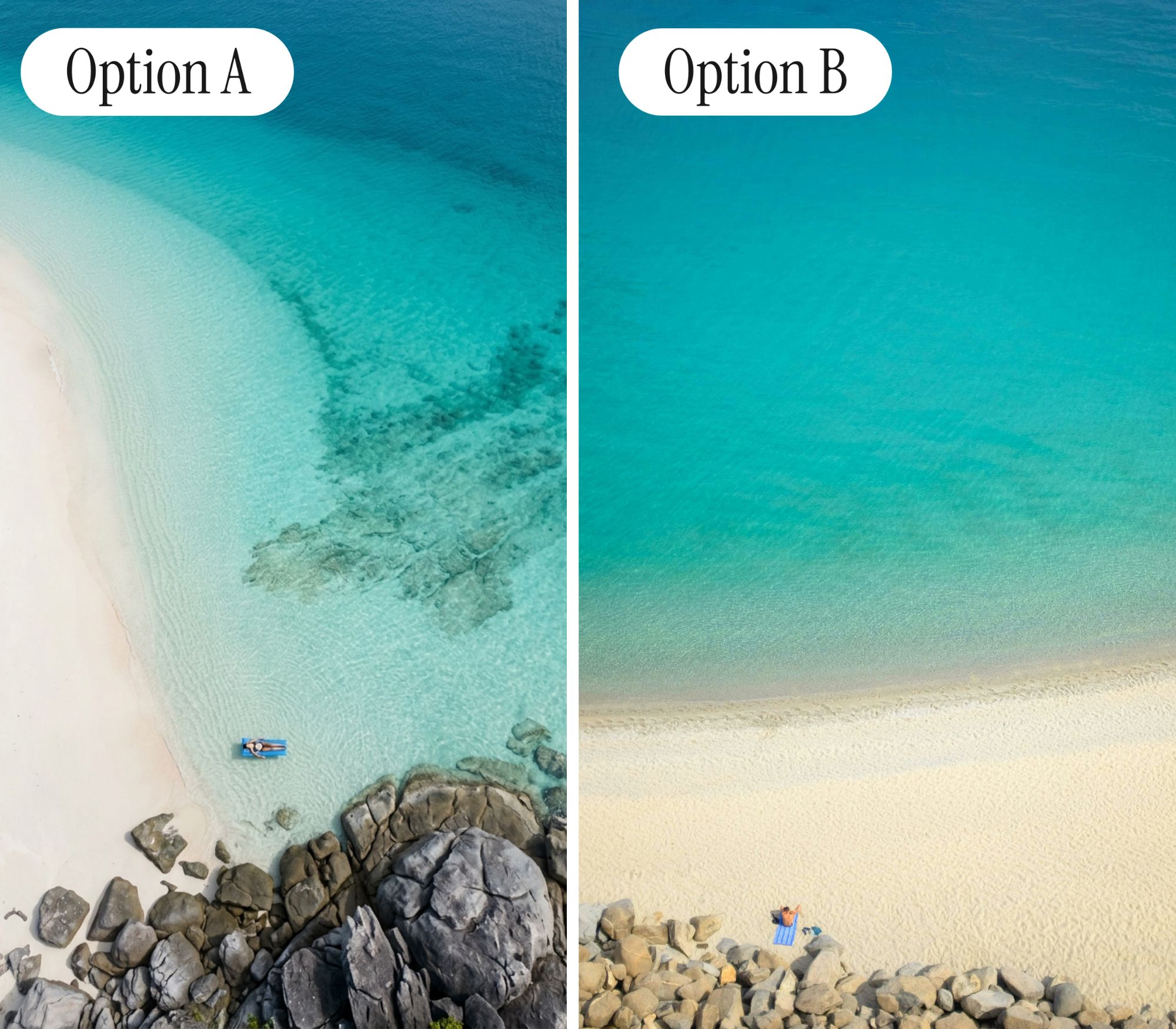
POLL RESULTS
Do you use an AI browser such as Comet, Atlas, Dia, etc.?
Yes, often (12%)
Sometimes (11%)
No (77 %)
The Deep View is written by Nat Rubio-Licht, Sabrina Ortiz, Jason Hiner, Faris Kojok and The Deep View crew. Please reply with any feedback.

Thanks for reading today’s edition of The Deep View! We’ll see you in the next one.

“Bulbs extending beyond the light fixture and wires hanging down from the light fixture are unlikely to be generated content, therefore it had to be real image.” |

“Shadowing does not look consistent in [this image]”
|



If you want to get in front of an audience of 750,000+ developers, business leaders and tech enthusiasts, get in touch with us here.