- The Deep View
- Posts
- Americans souring on AI, new data shows
Americans souring on AI, new data shows

The Deep View
March 31, 2026


Welcome back. Snowflake's VP of AI told us the company is further along in its AI transformation than most people realize, and that the SaaSpocalypse may actually be Snowflake's big moment. Meanwhile, the AI narrative is fracturing on multiple fronts. A new Quinnipiac poll of 1,400 Americans finds 55% believe AI does more harm than good, up 11% year-over-year. And the rest of the data in the study doesn't paint a pretty picture either. If you're looking for a way to help friends and family get real value from AI right now, I have four tools worth recommending to anyone. Take a look at the list. It's the kind of thing that might help people overcome some of their fears.
—Jason Hiner
1. Americans souring on AI, new data shows
2. 4 AI tools worth recommending to anyone
3. Snowflake’s AI push counters SaaSpocalypse fears
RESEARCH
New data: Americans turn more negative on AI
AI is losing the narrative among Americans.
In a poll of roughly 1,400 US adults conducted by Quinnipiac University, 55% reported that they felt AI would do more harm than good, up 11% year-over-year. Around 76% reported that they trust AI “hardly ever” or “only some of the time,” and 62% reported not being excited about the technology.
Along with broadly feeling disenchanted with the tech, more than half reported that AI is moving far faster than they expected.
Poll respondents were also generally wary of the tech’s impact on the job market and workforce:
More than 80% reported that they wouldn’t take a job where an AI program acted as a manager, assigning tasks or schedules
Around 70% believe that AI will cut the number of job opportunities, up 14% from the previous year’s poll
And 30% reported being concerned that AI would make their own jobs obsolete, up 9% year-on-year. Despite broader job market concerns, 48% reported that they were not concerned at all about AI taking their own jobs.
"Americans are more worried about what AI may do to the labor market than about what it may do to their own jobs,” Tamilla Triantoro, associate professor in the Quinnipiac University School of Business, said in the report. “People seem more willing to predict a tougher market than to picture themselves on the losing end of that disruption - a pattern worth watching as the technology moves deeper into the workplace."
The poll reflects growing concern and confusion caused by seemingly endless conflicting reports of how AI will impact the job market. Some estimates suggest that AI is already capable of automating a large share of work hours, while others suggest that AI is increasing workloads rather than reducing them. Though one viral report from February painted a bleak, worst-case-scenario picture of how AI could utterly demolish the economy, software engineering jobs are up from last year.

The problem with the growing pile of contrary data is that people largely have no idea what to make of it. And often, when confronted with something new, the natural human reaction isn’t to accept it with an open mind, but to rebel against it – especially if that thing threatens everything from their livelihood to the way they live their life. To make people comfortable with it, AI firms may need to shift away from the image that their tech is here to take people's jobs, and instead offer ways to help people gradually transform the work they do without stripping them of their sense of purpose. But that may be a difficult feat, as trigger-happy companies continue to slash their workforces, using AI as an excuse, whether the tech is ready or not.

TOGETHER WITH TWELVELABS
Indexing Video Just Got A Whole Lot Easier
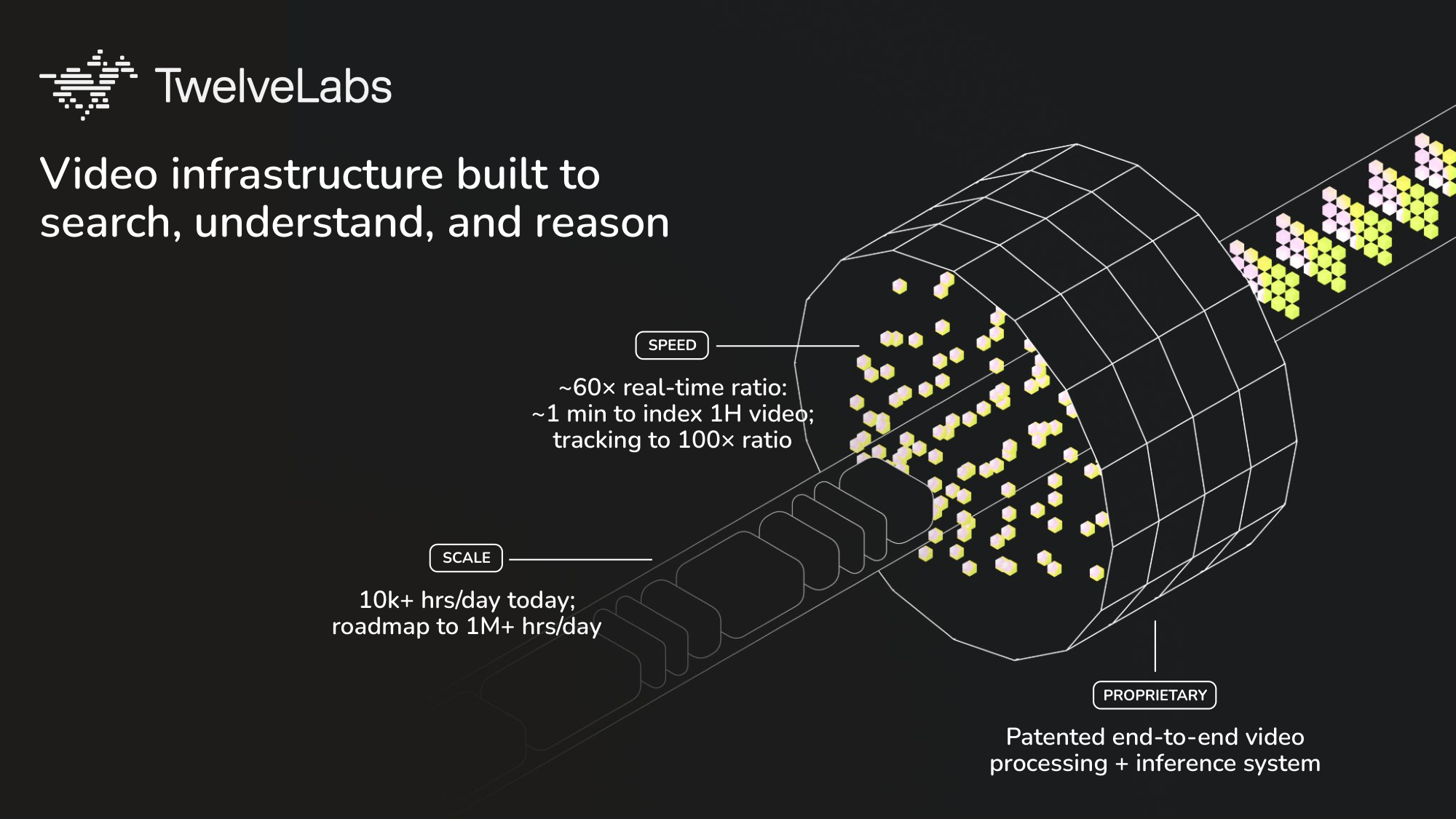
Most video search tools collapse everything, visuals, audio, motion, into a single signal. It works in demos. In production, your queries compete with the wrong data and retrieval gets worse as your library grows.
TwelveLabs encodes each modality separately. Speech queries route to speech. Visual searches don't get muddied by audio. And accuracy holds whether you have 100 hours of footage or 100,000.
Teams have replaced hours of manual review with queries that return results in seconds.
See it for yourself. Try the Playground free, or schedule a demo with the TwelveLabs team.
PRODUCTS
4 AI tools worth recommending to anyone

People outside the tech bubble don't always realize that the world of AI is bigger than ChatGPT and Claude.
For your friends, family, and community, you have the opportunity to help them take advantage of some of the best things that the current AI revolution has to offer and avoid feeling like a victim of the changes that AI is bringing to work and life.
With that in mind, I have four tools that I'd recommend to everyone:
Wispr Flow: One of the most common ways that people have wanted to interact with Siri, Alexa, and Google Assistant for years is to dictate emails, text messages, and other content for documents. But the quality has been so mediocre that it's become laughable at times. Wispr Flow uses AI to turn your dictation into clearly enunciated, well-punctuated text. While the old tools worked about 70% of the time and regularly produced odd anomalies, Wispr Flow works about 95% of the time and often cleans things up for you. While the average person types about 50 words per minute, they can speak 150-200 words per minute, so there's an opportunity for a 3-4x productivity boost.
Comet or Atlas: Since most people are used to web browsers, installing an AI browser can be the best way to start taking advantage of chatbots' unique capabilities. You basically get a chatbot prompt instead of a Google prompt. Perplexity's Comet browser is a great choice because it will automatically route a question to the chatbot that can handle it best. And for people who are already used to using ChatGPT, the Atlas browser will be an easy transition.
Perplexity Discover: One of the best AI tools that's flying under-the-radar is Perplexity Discover, which I'd argue is the best custom news app you can find right now. You can access it in the left toolbar on Perplexity.ai, and it's also available in the Perplexity mobile app, where you simply click the icon in the upper right corner. You can use the app to browse Top Stories, Tech & Science, Business, and other main categories. The real value comes from the For You section, which uses AI to find the stories you're most interested in over time. I find it curates far more accurate and useful selections than Google Discover, for example.
ChatGPT Voice: We started the list with audio and voice AI, and that's where we'll end. ChatGPT Voice is an incredibly helpful and easy way to access the chatbot from your phone by using your voice to ask questions and get concise audio responses in return. You can even pick the style of voice you'd like to interact with. Just open the ChatGPT app and tap the little blue icon. Or if you have an iPhone with an Action Button, this is the perfect thing to assign to it by using the Shortcut that automatically shows up if you have ChatGPT installed.
Other tools like Granola for capturing meeting notes and Lovable for creating your own applications are also great for beginners, but are a step up in complexity from the four tools mentioned above.
Make no mistake: AI is still losing the popularity contest among the broader population right now. It’s far less common to find an AI optimist than it is to find people who fear and revile the tech. If you'd like to help the people in your life who are outside the tech bubble start to understand some of the positive things that AI has to offer, these four tools may be the place to start. However, it’s going to take more than tools to flip the script on AI. Education on the risks, rewards and reality of AI needs to take place alongside adoption.

TOGETHER WITH VENN AI
Finally, Trust Your OpenClaw Agents at Work
Real agent productivity without the risk
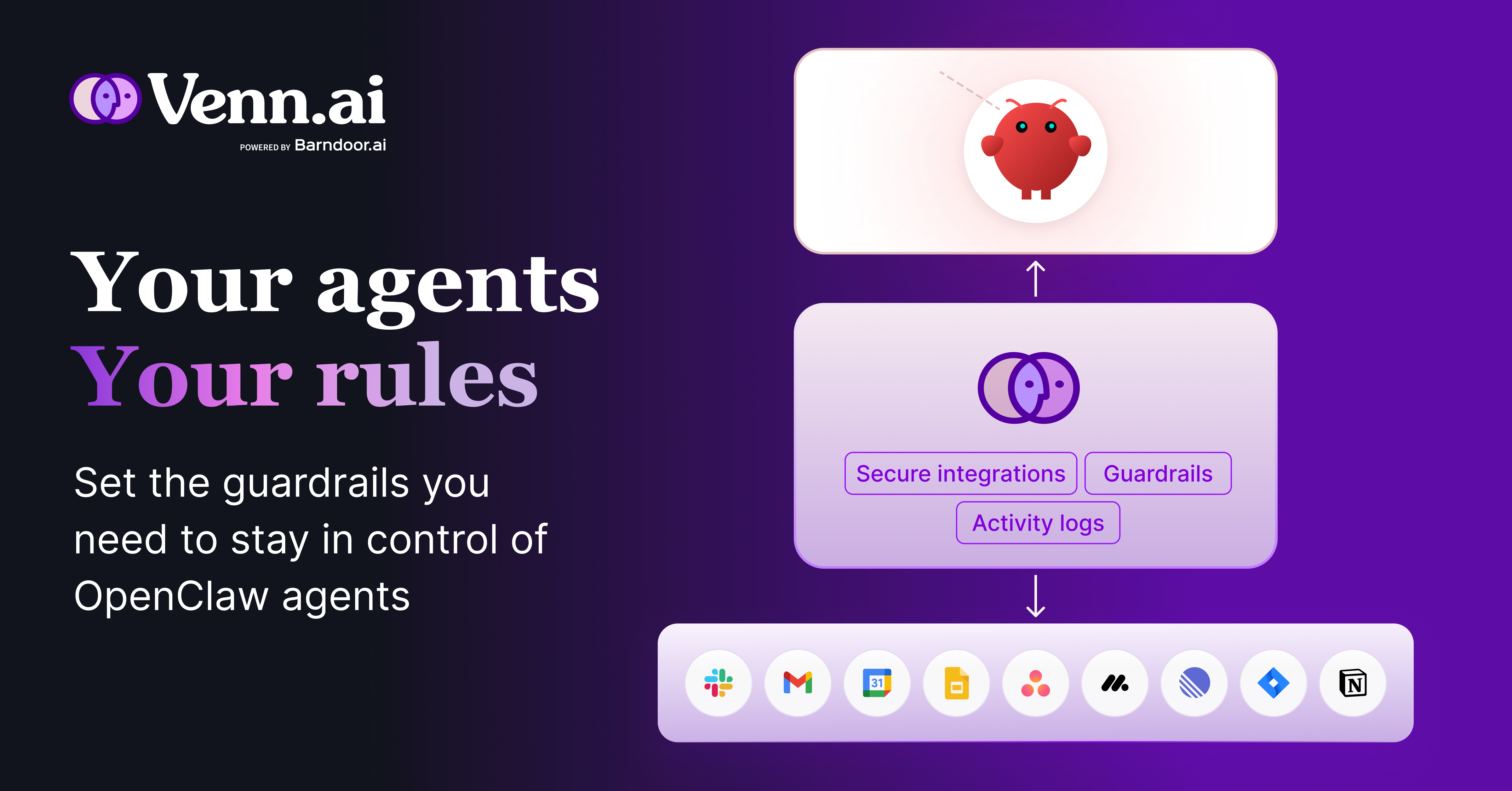
To be useful, OpenClaw needs access to your tools like Google Workspace, GitHub, Notion, Slack, and Jira. But making unverified and unstable integrations for each app creates complex workarounds and real security risks, and that's exactly what's stopping teams from putting OpenClaw to work.
Venn for OpenClaw adds the missing security layer so you can safely connect OpenClaw to 40+ business applications without the complexity. With a single MCP connection you can:
Set tool-level permissions like read and write access per app
View full activity logs of everything your agents do
Optimize tool selection to reduce context window usage and improve agent performance
Trust OpenClaw agents to get work done
Start a free trial and get 50% off an annual plan with code DEEPVIEW. Offer expires April 15, 2026.
ENTERPRISE
Snowflake’s AI push counters SaaSpocalypse fears

Snowflake has been a stalwart of the SaaS economy and a leader in enterprise data for the past decade. But the company is deep in the middle of a transformation that most people haven't recognized yet, said Baris Gultekin, vice president of AI at Snowflake.
In the latest episode of The Deep View Conversations, senior reporter Nat Rubio-Licht talks with Gultekin for a candid look at how the company is navigating the AI era and what it's learning in real time, shifting both how the company operates internally and how it’s customers data needs have changed.
“Snowflake sits in a different place … as AI becomes a core way of interacting with data and with services, a data platform is a very very helpful product,” said Gultekin. “Ultimately, the agents that you build are as good as the data that you provide to them.”
Gultekin talks openly about how the entire team inside Snowflake is now using AI coding tools to build skills and automate their work. That includes non-developers who are using Project SnowWork, an AI agent for professionals across all roles.
Baris joined Snowflake in 2023 through the acquisition of blockchain startup nxyz and has spent the past three years running the AI teams inside the enterprise tech giant. He also brings a rare perspective from his time working on Google Assistant in the pre-LLM era, which gives him a unique lens on how much has changed.
“What has surprised me is the pace of innovation: how fast we’re moving,” Gultekin said. “The industry has created this tremendous opportunity, and everyone is working very hard in AI to capture the momentum.”
It’s undeniable that AI is shifting the way that software companies operate. As AI threatens to bring about the so-called “SaaSpocalypse,” enterprises have been forced to think on their feet. Snowflake has managed to stay agile without straying from its roots, giving enterprises a clear picture of the very thing that sits at the heart of AI: Data. Though executives of companies like Salesforce and Workday have downplayed the severity of the SaaSpocalypse, legacy tech providers may need to adopt a similar flexibility to figure out what they can bring to the table in the AI era.

LINKS

Mistral raises $830 million for Nvidia-powered data centers in Europe
Starcloud raises $170 million to build data centers in space
All of xAI’s 11 original cofounders have reportedly ditched the company
AI chip company Rebellion raises $400 million at $2.3 billion valuation
Perplexity, Fiscal AI expand partnership for financial data for investors
Coatue reportedly projects nearly $2 trillion valuation for Anthropic by 2030

Qwen3.5-Omni: The latest state-of-the-art model by Alibaba, with understanding of text, images, audio, and audio-visual content.
Claude Code: Computer use is now available on Claude Code for Pro and Max users, allowing the AI assistant to open your apps and click through your UI.
Critique: Microsoft’s new multimodal deep research model available in 365 Copilot, leveraging multiple models to find the most optimal responses.
Notion MCP: Notion now connects several AI tools, including ChatGPT, Claude, and Cursor, directly to your workspace using Model Context Protocol.
Manus: You can now use your phone to start tasks, access files, and run workflows by remotely controlling your computer with the Manus Desktop app.

Capital Group: Lead AI AppSec Engineer
Scale AI: Research Scientist, Frontier Risk Evaluations
Google: Software Engineer, Quantum Open Source, Quantum AI
Meta: Fundamental AI Researcher - FAIR


A QUICK POLL BEFORE YOU GO
Do you think the Americans public's opinion of AI will broadly be favorable by the end of the decade? |
The Deep View is written by Nat Rubio-Licht, Sabrina Ortiz, Jason Hiner, Faris Kojok and The Deep View crew. Please reply with any feedback.

Thanks for reading today’s edition of The Deep View! We’ll see you in the next one.

“This had more “quirks” to it that AI would be unlikely to come up with. The graffiti at first seemed like it might be AI-generated, but since there was also plausible writing elsewhere in the picture, I decided it’s probably the real one.” “The carpet store sign is legible in [this image] and isn’t a bunch of random words put together to make it look like a real sign.” |

“I failed because I gave excessive attention to the one-wheel bicycle...” “It is becoming increasingly common that the impossible image is the real one.” “In the real ‘photo’ where is the front wheel!” |




If you want to get in front of an audience of 750,000+ developers, business leaders and tech enthusiasts, get in touch with us here.