- The Deep View
- Posts
- Claude surges to No. 1 amid Pentagon conflict
Claude surges to No. 1 amid Pentagon conflict

The Deep View
March 02, 2026


Welcome back. AI isn’t killing as many software jobs as we thought. New data shows developer job postings are up 11% year-over-year, as vibe coding lowers the barrier to building custom apps and ultimately drives demand for deeper expertise. Qualcomm just fired the starting gun on the 2026 AI wearables race with its Snapdragon Wear Elite chip, built to upgrade multimodal on-device AI in glasses, pins, earbuds, and more. And in Washington, Anthropic’s refusal to bend on surveillance and autonomous weapons triggered a Pentagon ban, sending its Claude app rocketing to No. 1 on Apple's App Store and intensifying the rivalry with OpenAI. —Jason Hiner
1. Claude becomes No. 1 app hours after Pentagon ban
2. Qualcomm chip preps 2026 AI wearables boom
3. Report: Vibe coding boosts software jobs by 11%
POLICY
Claude becomes No. 1 app hours after Pentagon ban

In standing up to the US government, Anthropic has built up so much goodwill that people are chalking “GOD LOVES ANTHROPIC” on the sidewalks outside of its San Francisco HQ. It also gave OpenAI an opening it needed.
After Anthropic stood firm in its refusal to bend on its two conditions for using its AI — no mass surveillance of US citizens and no fully autonomous weapons — the Pentagon and the Trump Administration went to DEFCON 5 on Friday. They designated the company a supply chain risk, a title typically reserved for adversaries. President Donald Trump has also directed every government organization to “immediately cease” using Anthropic’s technology.
“The Terms of Service of Anthropic’s defective altruism will never outweigh the safety, the readiness, or the lives of American troops on the battlefield,” Secretary of War Pete Hegseth said in a post on X.
While facing the fallout of losing hundreds of millions in revenue, Anthropic has seen a massive outpouring of support, both in the AI community and beyond. In the hours after the government ban, its Claude app skyrocketed to the top of Apple's App Store, dethroning ChatGPT in the No. 1 spot.
Anthropic employees, meanwhile, broadly took to X to praise their employer. AI leaders like Ilya Sutskever have commended the company for its stance, and the app has even earned the public admiration of celebrities who have nothing to do with AI, like Katy Perry.
In an interview with CBS News, CEO Dario Amodei called disagreeing with the government the “most American thing in the world.”
Anthropic vowed to take the Pentagon to court over the extent of the supply chain risk designation. In a statement on Friday, the company said the designation is both "legally unsound and set a dangerous precedent” for companies to negotiate with the government.
In the meantime, OpenAI seized the opportunity to sign a contract with the Department of War to use its models instead.
While OpenAI claimed that its agreement with the Pentagon upholds its "redlines" over domestic surveillance and autonomous weapons and "has more guardrails than any previous agreement for classified AI deployments," the reality is a little more nuanced.
Anthropic sought to preserve explicit restrictions barring the use of its models for mass surveillance of U.S. citizens and fully autonomous weapons. The Pentagon, which often structures contracts around broad “all lawful purposes” language, reportedly preferred not to carve out those exceptions. Anthropic declined to move forward under those terms. OpenAI later signed a Department of War agreement structured around the standard federal contracting language. OpenAI CEO Sam Altman defended the stance, saying, "I do not believe unelected leaders of private companies should have as much power as our democratically elected government."

While all the attention is certainly a silver lining for Anthropic, it was also its moment of truth to uphold the company's founding principles of AI responsibility, safety, and ethics. By not bending to the Pentagon’s will, especially given that human rights and lives might be at stake, the company was keeping its promises. Its refusal to capitulate may also put pressure on rivals. An open letter titled “We Will Not Be Divided” began circulating on social media and has since garnered 537 signatures from Google employees and 89 from OpenAI employees. By holding to its stated objectives and incurring the wrath of the federal government, Anthropic has effectively made itself a martyr.


TOGETHER WITH AIRIA
Want To Give Every Employee The Power of AI?

And, more importantly, want to do it safely and securely? Then you don’t need just any AI platform… you need Airia.
Airia is the enterprise AI platform built to offer organizations the best of both worlds – access to the kind of no-code, low-code, and pro-code tools that boost productivity and innovation for your team, while also maintaining the security you need to ensure compliance. The kicker? You can manage all of these features from one central hub, offering simple, seamless control. It’s the perfect platform to future-proof your enterprise with the power of AI… without ever having to worry about any of the security concerns that keep the rest of us up at night.
HARDWARE
Qualcomm chip preps 2026 AI wearables boom

For AI to be genuinely useful in the real world, it needs to escape the screen and engage with the physical world. That's the idea behind the booming AI wearables market, and Qualcomm's newest platform is positioning itself as the catalyst for the next big leap forward.
Kicking off MWC on Monday, Qualcomm launched its new Snapdragon Wear Elite platform designed to power AI wearables, including pins, watches, earbuds, pendants, and glasses. The Wear Elite platform addresses primary AI wearable needs: low-power, always-on availability and on-device AI processing for low latency and user privacy.
A key aspect of achieving those goals is the inclusion of the Qualcomm Hexagon NPU architecture, which supports up to two billion‑parameter models locally on-device. Other spec highlights include:
Improved performance: 5x single-core CPU performance improvement and up to 7x faster GPU in max FPS performance.
Improved power and charging: multi-day battery life, 30% longer day of use compared to the previous generations, and rapid charging, powering up to 50% in 10 minutes.
Multi-mode connectivity support that integrates: 5G RedCap, Micro‑Power Wi‑Fi, Bluetooth 6.0, UWB, GNSS, and NB‑NTN.
The chipset is the first to work across WearOS by Google, Android, and Linux. Global partners supporting the platform include Google, Motorola, and Samsung. Furthermore, the first Snapdragon Wear Elite-powered devices will be available in the next few months, according to Qualcomm.
The company said the Wear Elite platform is part of Qualcomm’s broader vision for building an ecosystem of wearable devices where multimodal AI agents are tailored to users, understanding their context and anticipating their needs.
While the AI wearables race has already started, it's about to get a lot more intense in 2026. Meta's Ray-Bans, which also use Qualcomm chips, sold millions of units in the past year alone. Now nearly every major tech company is following suit. Google and Samsung have an imminent smartglasses launch that looks likely to run on Qualcomm’s new platform. Meanwhile, Apple is rumored to be developing its own glasses and AI wearables, and Motorola previewed Project Maxwell at CES, a pin that takes agentic actions based on what it sees. But these devices desperately need substantial processing power and on-device AI capabilities in a tiny, battery-constrained package. So step-changes like the new Qualcomm chips hold promise that the next wave of 2026 devices will be able to pack in new capabilities.

TOGETHER WITH CODER
Why enterprise security teams are blocking AI coding tools
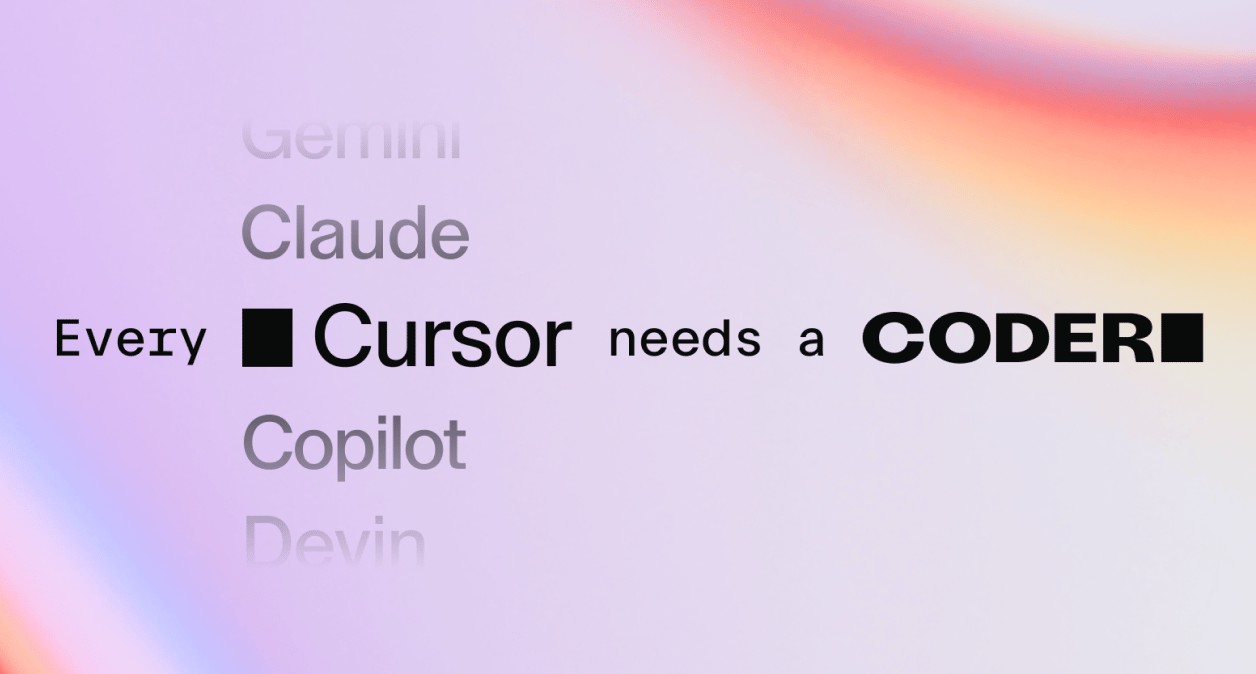
Picture this: Your developers started using Cursor last month. Productivity shot up 40%. Pull requests doubled. The platform team started planning a company-wide rollout. Then your security team stepped in.
Not because they're innovation killers. Not because they don't understand the value. Because when AI agents run on local laptops with unrestricted access to your private repositories, your APIs, and the open internet, you've created a governance nightmare that no CISO can defend.
So the tools get blocked. Innovation stalls and developers go back to fighting their local environments while your competitors figure out how to ship faster with AI. There has to be a better way… and there is.
WORKFORCE
Report: Vibe coding boosts software jobs by 11%

Even as vibe coding allows users to produce massive quantities of code, that doesn’t mean everyone can be a software engineer without training.
Earlier this week, the viral 2028 Global Intelligence Crisis report from Citrini Research painted a bleak picture of the impacts of AI adoption at scale in which the economy and job markets crash as a result of AI-enabled productivity. This was a worst-case scenario thought experiment, but not everyone is buying into the doom and gloom.
In a rebuttal to Citrini’s post, Citadel Securities laid out the current state of the labor market in the face of burgeoning AI adoption. The findings point to the fact that the current unemployment rate is 4.28% and software engineering job postings are up 11% year over year.
In a post on X, Aaron Levie, CEO of Box, said of the data that while AI is allowing coding novices to do more, it’s also leading them to launch new custom software that eventually requires more expertise. "This is counterintuitive for some … but if you lower the cost of something that was previously supply-constrained, demand for that thing goes up. Software engineering is just one of the easiest examples to contemplate," Levie said.
This adds another layer to the conflicting narratives of AI’s impact on the job market, and particularly on the software engineering field. While some estimates point to AI making software engineers, among other jobs, entirely automated and therefore obsolete, other data shows that AI is increasing workloads, rather than shrinking them. One projection indicates that many of those laid off as a result of AI will be rehired to do similar work.
In short: While vibe coding is making it easier for tech novices to produce code, designs or proofs-of-concept, turning that code and those prototypes into something that’s actually useful requires a more deft hand, thereby creating more demand for technical expertise.
While this is good news for the software engineers worrying that their livelihood is on unsteady ground, it may also be another point in favor of the “SaaS-pocalypse” argument. Though executives of companies like Salesforce and Workday are downplaying the impact that AI will have on legacy software firms, AI is enabling enterprises to build their own custom tooling more easily than ever. That means they’re likely to shift their spending from legacy SaaS platforms to in-house developers and the AI tools that facilitate their rapid building.
LINKS

Stanford study reveals that major AI firms train on user chats by default
Chinese hardware firm Honor shows off smartphone with robotic camera
DeepSeek will reportedly release multimodal V4 model this week
Due to AI coding, AWS engineers are being pushed to take on new tasks
Nvidia, Cisco to partner on building 6G networks

Claude Import Memory: You can now copy-paste anything into Claude, including your preferences, projects, and context from other AI providers.
Autostep: Digs up all of your repetitive, AI-ready tasks and builds agents to solve them.
Ashr: Test your agents with synthetic sounds, images, texts, files, videos, and environments, to train them for production.
AIPPT AI: An AI-powered powerpoint presentation tool, including instant slide generation, smart content structuring and editable outputs.

Google DeepMind: Principal Research Engineer, Gemini Evals
Capital One: Sr Distinguished Applied Researcher (World Models)
Anthropic: Research Scientist, Societal Impacts
Canva: Staff Research Scientist - Video & Audio Generative AI


POLL RESULTS
Should Anthropic have acquiesced to the Pentagon's request to remove safety restrictions?
Yes (17%)
No (79%)
Other (4%)
The Deep View is written by Nat Rubio-Licht, Sabrina Ortiz, Jason Hiner, Faris Kojok and The Deep View crew. Please reply with any feedback.

Thanks for reading today’s edition of The Deep View! We’ll see you in the next one.

“It contains more details and more challenging architecture.” |

“[This image] was trying too hard to get the light and shadows correct.” |


Take The Deep View with you on the go! We’ve got exclusive, in-depth interviews for you on The Deep View: Conversations podcast every Tuesday morning.

If you want to get in front of an audience of 750,000+ developers, business leaders and tech enthusiasts, get in touch with us here.