- The Deep View
- Posts
- Iran conflict threatens AI and global economy
Iran conflict threatens AI and global economy

The Deep View
March 24, 2026
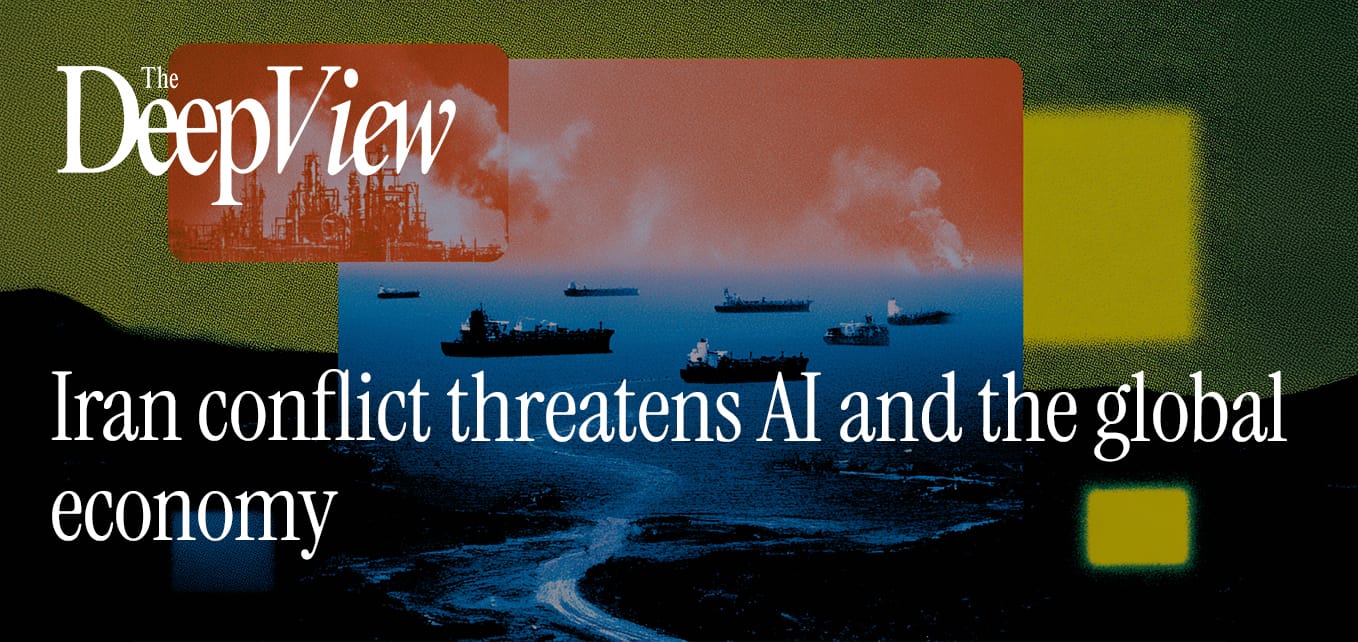

Welcome back. OpenAI is looking to fusion power as a possible answer to AI’s growing energy dilemma. This is the latest sign of how urgent the infrastructure race has become. Cisco’s new LLM security rankings are out, and Anthropic has claimed 8 of the top 10 spots, putting pressure on its rivals to prove their models are enterprise-ready. Also, don't forget to check out who's in the bottom 10. The war in Iran shows how exposed the tech industry really is. The dangers to tech workers, chip supply chains, and data center projects are a reminder that geopolitics and global instability could shape AI’s future as much as innovation.
—Jason Hiner
1. Iran conflict threatens AI and the global economy
2. Anthropic takes 8 spots in top 10 most secure LLMs
3. OpenAI turns to fusion to solve AI energy crunch
MARKETS
War in Iran puts tech industry on fragile footing
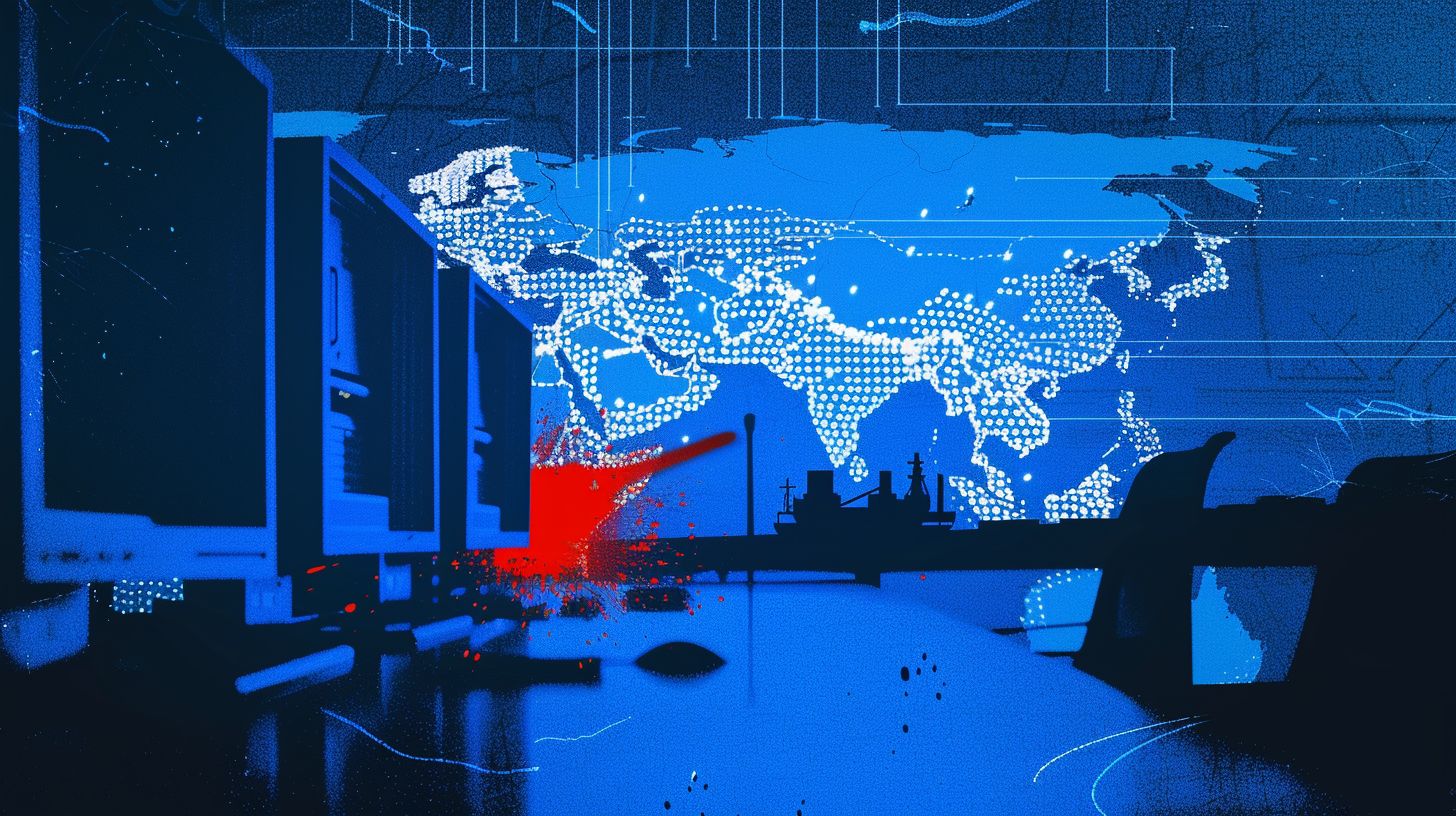
The tech industry is notorious for operating within its own bubble — sometimes even its own reality distortion field — but the impacts of the Iran-U.S. war are threatening to bear down on it.
Multiple factors are now in play in the conflict that could disrupt tech companies and impact the pace of AI growth:
Iran names U.S. tech firms as targets: The official news agency of the Iranian military listed Amazon, Microsoft, Palantir, and Oracle as the "enemy's technological infrastructure" and made clear that it considers them military targets. This was connected to the U.S. threat to obliterate Iran's power plants, a stance that has since been softened.
Critical mineral shortage disrupts chip makers: Semiconductors run the world, especially AI, and the industry is facing a critical shortage of minerals because of the conflict. A third of the world's helium comes from Qatar, and it's essential for cooling systems and circuits in producing semiconductors. The closure of the Strait of Hormuz puts the semiconductor supply chain at risk, and Iran has already struck the Qatar helium plant at Ras Laffan and taken it offline.
Hyperscalers rethink Middle East expansion: Tech companies had been preparing to invest billions of dollars in data centers and AI factories, but the instability and uncertainty of the conflict between the U.S./Israel and Iran has put those plans in jeopardy. Iran has already attacked AWS buildings in the UAE. OpenAI, Nvidia, Oracle, and Cisco have been collaborating on a potential 5-gigawatt facility in the UAE. But a prolonged conflict could redirect this and other projects to safer havens like India, Southeast Asia, or Northern Europe.

In terms of the economic fallout, we may only be a week or two away from the conflict bringing the semiconductor industry to a halt. That will have cascading impacts across many sectors of the economy and risk triggering a global recession if the conflict becomes prolonged. More broadly, tech companies becoming military targets is evidence of how central the industry has become to nearly every aspect of modern life. The employees of tech companies in the region are now at risk, as are Iranian civilians who work at power plants. As is often the case in war, the norms and standards of conflict can get thrown out the window when leaders and countries become impatient or desperate. And tech has suddenly become a high-value target.

TOGETHER WITH ORACLE NETSUITE
Why Cash Flow Matters More Than EBITDA for Your Business

EBITDA is a popular metric, but it doesn’t reflect the complete financial health of your business. Cash flow, on the other hand, reveals your real capacity to cover expenses and invest in growth.
Download the guide to learn why operating cash flow is key for every CFO and receive a go-to checklist for optimizing financial operations.
GOVERNANCE
Anthropic takes 8 spots in top 10 most secure LLMs

The promise of AI-driven productivity comes with a catch: every implementation hands over the keys to your company's data and operations to new technology, unlocking a host of security risks.
To help enterprises better determine which models minimize or amplify those risks, Cisco on Monday released its LLM Security Leaderboard, a comprehensive ranking of the top models based on how they respond to adversarial attacks and the associated security risks.
"Data across numerous studies indicate that the adoption of AI into organizations is outpacing security readiness. Cisco’s own AI Readiness Index found 83% of organizations planned to deploy agentic AI, but only 29% felt ready to do so securely," Amy Chang, Head of AI Threat Intelligence & Security Research at Cisco, told The Deep View. "The LLM Security Leaderboard gives leaders and security teams across diverse adoption and maturity stages a concrete starting point to understand how generative AI can be susceptible to different threats."
The leaderboard results were calculated based on rigorous testing that measured single- and multi-turn attacks aimed at eliciting a harmful or malicious response from the model. Anyone can access the results for free, but here is a quick breakdown:
Anthropic: The company dominated the leaderboard, holding 8 out of the top 10 spots, with Claude Opus 4.5, taking first place, followed by Sonnet 4.5 and Haiku 4.5.
OpenAI: GPT-5.2 and GPT 5 Nano managed to make it into the top 10, too, coming in 7th and 9th place, respectively.
Bottom of the leaderboard: Mistral took the last two places with its Magistral Small 2509 and Ministral 3 14b Instruct models. The list of the bottom 10 (least secure models) also includes models from DeepSeek, Cohere, Qwen and xAI.
A key advantage of Cisco’s approach is its emphasis on limiting bias. The methodology was posted online to ensure that readers understood exactly how the conclusions were reached and could accurately compare models side by side. Cisco also reassures the public that no extra guardrails or safety measures were used to bolster any models’ performance.
"Many benchmarks focus predominantly on single-turn jailbreaks," said Chang. "Our leaderboard explicitly evaluates multiturn conversational attacks, which better reflect real-world adversarial behavior where attackers attempt to degrade model guardrails over longer conversations."
For a complete look at the leaderboard, the public is invited to visit the website, where the LLM Security Rankings, Cisco AI Security and Safety Framework, and Methodology are available.
While other companies have previously offered similar rankings, the public nature of Cisco's LLM Security Leaderboard is key to holding AI companies accountable. Microsoft, for instance, provides security scores for models in its internal offerings, helping customers choose the right tool for specific use cases. But that visibility is limited to a subset of customers, reducing the pressure on the companies behind the models. Cisco's leaderboard is open to all, including the enterprise business leaders these AI labs most want to impress. That kind of public scrutiny is more than enough motivation for model makers to shape up.

TOGETHER WITH TELNYX
The Voice AI latency problem everyone's solving wrong
Throwing faster models and better prompts at Voice AI latency is not working. Latency isn't a software or model problem. It's a physics problem.
Most Conversational AI setups run on five separate vendors wired together. Audio hops from a telephony provider to a speech-to-text service to an LLM to a TTS engine to an orchestration layer. Every hop between vendors adds delay, and your customers notice. Jitter and awkward pauses break trust or make them hang up.
The answer isn't a better algorithm. It's fewer hops. Co-locate inference with telephony on the same carrier network, and you eliminate the overhead entirely. That is how we built Telnyx. One network, zero inter-provider hops.
If you're building voice agents, hear what that sounds like.
Try it free — hear the difference
See the architecture
STARTUPS
OpenAI turns to fusion to solve AI energy crunch

OpenAI is eyeing solutions to AI’s energy problem.
The company is reportedly in talks to buy electricity from Helion, a fusion energy startup backed by OpenAI CEO Sam Altman, according to Axios. The company aims to secure a percentage of Helion’s production, starting at around 12.5%, aiming to harvest the equivalent of 5 gigawatts by 2030 and as many as 50 gigawatts by 2035.
Additionally, Altman, who holds a large stake in Helion and has invested in the company since 2021, has stepped down from the board of the company and recused himself from deal discussions.
It’s no secret that AI poses the risk of a massive energy shortfall. According to Morgan Stanley analysts, AI’s appetite for power could leave the US with a shortfall of up to 13 gigawatts of power by 2028. With the skyrocketing demand, several major AI companies even signed a pledge with the U.S. government, called the “ratepayer protection pledge,” requiring them to bear the costs of new electricity generation to power their data centers.
And OpenAI isn’t the only company seeking fixes to AI’s energy issue. Google has similarly bet on fusion energy, signing a deal in June with Commonwealth Fusion Systems, a rival of Helion, to buy 200 megawatts of power. Google and xAI are also betting on moving computing entirely off-planet, each driving its own initiatives for “orbital data centers” to harness solar energy.
However, OpenAI’s quest for power also follows the company narrowing its expectations on compute spend in late February, now anticipating spending $600 billion on infrastructure commitments by 2030, rather than the much-reported $1.4 trillion that raised so many eyebrows in 2025.
By resetting its expectations and shoring up its energy reserves, OpenAI is narrowing the gap between what it has and what it wants, which is particularly vital now that AI firms are under pressure to develop their own power supplies. Though a lot of hype has built up around its data center plans, tempering its spending outlook could give it the opportunity to turn a profit sooner rather than later. Funding new energy solutions, meanwhile, has two benefits: it allows it to meet its much-needed power supply and, out of necessity, could also fuel clean energy development.

LINKS

Claude can now control mouse and keyboard to handle desktop tasks
Nvidia’s Jensen Huang says he thinks “we’ve achieved AGI”
Meta hires the team behind personal AI agent startup Dreamer
Apple announces WWDC to take place June 8 to 12
OpenAI offers private equity firms returns of 17.5%, early access to models
AI chip firm Kandou AI raises $225 million at $400 million valuation
A16Z warns software founders to either jump on AI or make major cuts

Simple: 20M pounds lost with this and it doesn't require GLP-1, diets or calorie counting. See how it works. (sponsored)
Uni-1: The new video model from startup Luma AI, which thinks and generates pixels simultaneously.
Littlebird: A desktop app that recalls all of your context, from messages to docs to browsing, and helps you stay focused.
Gamma: AI presentation startup Gamma has launched AI-native templates, allowing you to take any deck and prompt it with changes while keeping the style the same.
Airweave: Open source agent startup Airweave has launched “Agentic Search,” allowing agents to spin up sub-agents to run strategies in parallel.

Apple: GenAI Research Engineer
Google DeepMind: Research Scientist, Gemini Safety
EY: Artificial Intelligence (AI) Identity Architect
Abbott: Senior Principal AI/ML Scientist


POLL RESULTS
Do you use any AI voice tools to improve your productivity?
Yes (36%)
No (60%)
Other (4 %)
The Deep View is written by Nat Rubio-Licht, Sabrina Ortiz, Jason Hiner, Faris Kojok and The Deep View crew. Please reply with any feedback.

Thanks for reading today’s edition of The Deep View! We’ll see you in the next one.

“Obviously a timelapse photo” |

“The rocks and water look lifelike and the horizon looks normal” “I thought the clouds looked real” “[This image] appeared much clearer, crisper” |


Take The Deep View with you on the go! We’ve got exclusive, in-depth interviews for you on The Deep View: Conversations podcast every Tuesday morning.

If you want to get in front of an audience of 750,000+ developers, business leaders and tech enthusiasts, get in touch with us here.