- The Deep View
- Posts
- Kimi adds to China’s open-source wins
Kimi adds to China’s open-source wins

The Deep View
January 28, 2026


Welcome back. AI tools with promises of optimizing workflows, streamlining efficiencies, and even reducing costs have been around for nearly three years–and enterprises are still buying them. A recent report from Salesforce-owned cloud data management company Informatica, published Tuesday, finds that AI adoption is still booming, with 69% of companies having integrated generative AI into their business practices in the past year. This, of course, isn’t without its challenges, with a little over half of the 600 leaders surveyed identifying data reliability as a top barrier to moving projects from pilot to production. Yet another example of how AI can only be as helpful as the data you give it. —Sabrina Ortiz
1. Kimi adds to China’s open-source wins
3. VCs bet $20B on Anthropic's AI vision
OPEN SOURCE
Kimi adds to China’s open-source wins
Chinese AI firms continue to prove themselves as champions of open source.
On Tuesday, Beijing-based Moonshot AI released Kimi 2.5, dubbing it the “most powerful open-source model to date.” The model is the latest iteration of the Alibaba-backed startup’s flagship model, claiming it can process text, images and video simultaneously.
Moonshot said in its announcement that Kimi 2.5 performs on par with, or surpasses, closed-source rival models from Anthropic, OpenAI and Google in benchmarks for video, images, coding and agents.
Kimi 2.5 can also self-direct an “agent swarm” of up to 100 sub-agents, executing complex tasks in parallel across 1,500 tool calls, according to the company.
Additionally, Moonshot AI claims its model is the “strongest open-source model to date for coding,” with particular strength in front-end development.
Moonshot AI’s success isn’t the only recent open-source win from a Chinese firm. On Tuesday, DeepSeek revealed an upgraded version of its optical character recognition model, a 3-billion parameter model that achieves state-of-the art performance for vision and document understanding.
These achievements are the latest sign that China is making significant open-source progress. Models like Alibaba’s Qwen continue to climb the ranks in popularity as developers search for cheaper and more efficient alternatives to proprietary, closed-source AI.

While models from OpenAI, Anthropic and Google remain on the leading edge, developers turn to open-source technology for a reason: A transparent ecosystem for innovation. Though developers and enterprises must weigh the risks they’re taking on by using these Chinese models, domestically grown open-source alternatives generally don’t stack up. The US market isn’t nurturing its open-source ecosystem in the same way that China does, especially as Meta, the biggest provider of open-source AI in the US with its Llama model family, reportedly turns its attention to a closed-source project called Avocado.

TOGETHER WITH THUNDERS
The Fastest-Growing AI Company In Testing
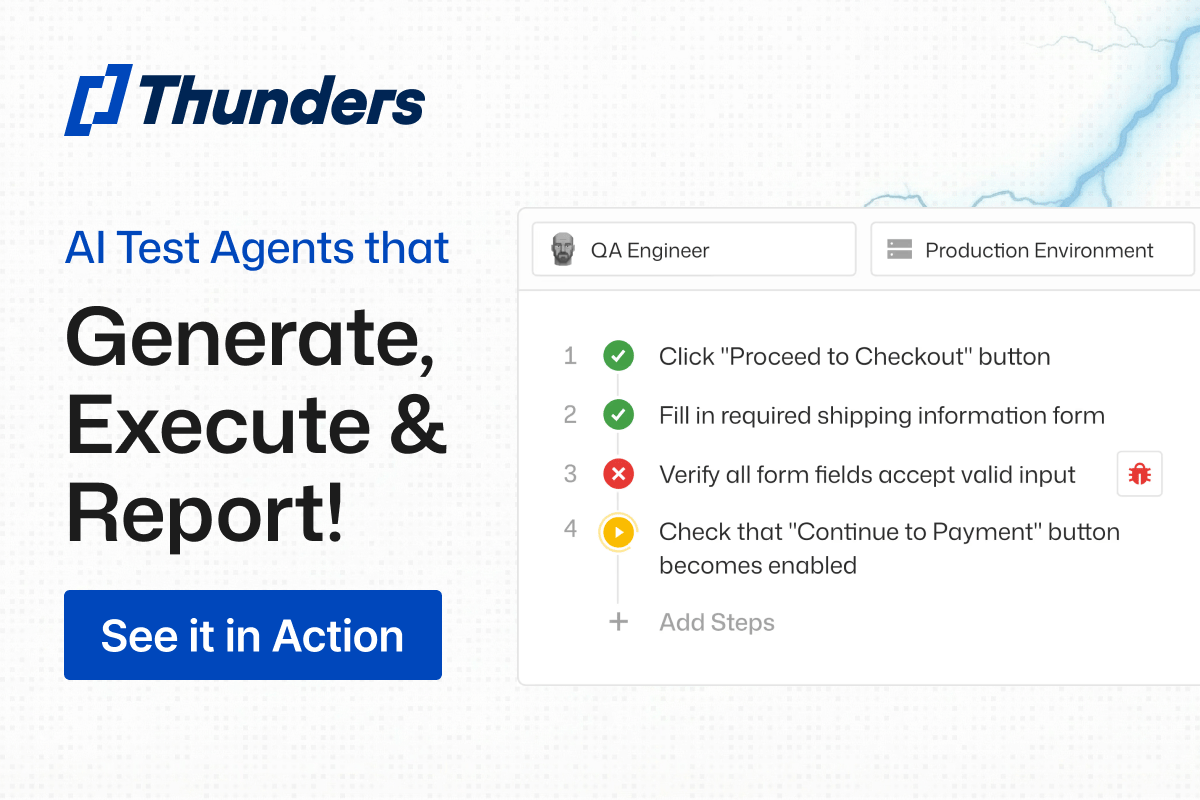
Founded by serial entrepreneurs, Thunders isn't your average AI-powered platform -- unlike most other tools, it allows teams to create, run, and maintain end-to-end tests without ever writing a single line of code.
By leveraging Thunders AI Agents, teams see up to 3× faster test creation and execution, enjoy 88% less maintenance with self-healing tests, and achieve 90% faster test authoring. Plus, fast deployment and 0-day onboarding mean teams can start improving quality immediately.
What's that mean for your product team? They can focus on delivering features with confidence, while Thunders' AI handles the complexity of translating high-level intent into comprehensive, adaptable tests, reducing operational overhead and accelerating time-to-market.
Are you ready to transform your entire QA process? Book a demo with Thunders right here.
PRODUCTS
Clawdbot (AKA Moltbot) goes viral—with real-world impact

Clawdbot has broken through the daily flood of new models to capture the internet’s attention.
The AI assistant launched as Clawdbot in December 2025, but rebranded to Moltbot on Tuesday after trademark confusion with Anthropic's Claude surfaced during its viral moment. The delayed recognition follows a familiar pattern: AI tools typically need time for organic adoption and word-of-mouth success stories to build momentum, a trajectory even ChatGPT followed.
Moltbot is different from your traditional AI chatbot, functioning as a much more capable AI assistant that performs tasks for you, true to its tagline, “the AI that actually does things.”
The possibilities are pretty much endless. Users can set it up to do simple tasks such as clearing their inbox and sending emails, or more complex actions such as connecting to several of their file systems and applications to automate entire workflows.
Some other advantages include that it is open-sourced, accessible from mobile or desktop via WhatsApp, iMessage, Discord, or Telegram, runs on your machine and has a larger memory.
The Deep View’s CEO, Faris Kojok, has spent the past few days tinkering with Moltbot and was left impressed, with the assistant autonomously automating complex workflows such as connecting his Granola account to his HubSpot or scanning his Gmail inbox every 10 minutes to draft replies in his voice and send him a Telegram summary.
Moltbot’s success has had a ripple effect on the AI space and beyond, including:
Since Moltbot can run locally and 24/7, many users are racing to purchase Mac Minis to use as home servers. Memes about it are taking over social media.
Cloudflare stock jumps and reports correlate it to the popularity of Moltbot, as its popularity has highlighted how Cloudflare’s global edge network could be key in supporting Agentic systems like Moltbot.
Still, there are security concerns regarding the structure of Moltbot as the company itself acknowledges in support documentation, “There is no ‘perfectly secure’ setup.”
The emergence and popularity of these tools continue to highlight a trend we keep seeing at The Deep View: people want AI tools and solutions that take assistance a step beyond just Q&A formats. Particularly notable is how much information and access people are giving the assistant despite the risks involved and investigations that revealed vulnerabilities, such as data exposure, again highlighting the desire to get meaningful help regardless of the cost.

TOGETHER WITH COHERE
Focus on building, not infrastructure

Introducing Model Vault, a dedicated, fully isolated SaaS platform to run Cohere models securely, at scale, and with guaranteed performance.
Integrate with your agentic AI stack, all while offloading the maintenance-heavy model inference and scaling to a single-tenancy cloud-based Model Vault. Building with Model Vault accelerates AI adoption without compromising enterprise-grade security and control.
MARKETS
Anthropic continues winning streak with $20B funding round

Everyone wants a piece of Anthropic.
The AI firm has reportedly closed its latest funding round above the $10 billion initial target at a $350 billion valuation, several outlets reported on Tuesday. According to the Financial Times, Anthropic has doubled its funding target for the round to $20 billion.
The funding is the latest triumph in a hot streak for Anthropic:
The round follows a $13 billion fundraise in September, which brought its valuation up to $183 billion at the time.
And in November, the company scored investments from Nvidia and Microsoft of $10 billion and $5 billion, respectively.
Meanwhile, Anthropic has been on a tear on the product side, releasing Claude Cowork at the beginning of January after its coding tool, Claude Code, received critical acclaim. And on Monday, it integrated apps directly into its flagship chatbot, essentially turning it into a one-stop shop for all enterprise user needs.
Anthropic still trails behind OpenAI on the valuation scale, which is reportedly courting investors for a $50 billion funding round at an eye-popping $830 billion valuation. The AI firms have found themselves in a heated race for user attention as they prepare for their rumored IPOs. These companies, however, have very different strategies in doing so.
OpenAI has cast its product net wide, vying for users in verticals including shopping, personal devices, digital ads, science and more. Anthropic, meanwhile, has been keenly focused on the enterprise, racking up major partnerships over the past several months, including IBM, Deloitte, Accenture, Cognizant and Allianz Global.
Only time will tell which of these two firms will come out on top. Though OpenAI currently maintains the lead, the company has committed itself to spending upwards of $1 trillion building out infrastructure. Even if all of its wildest dreams come true, the effort to pay all of those commitments back could keep it from reaching profitability for a long, long time. Anthropic, meanwhile, has far fewer commitments as it stands, only allocating $50 billion to build out data centers. This, plus its focus on the lucrative enterprise market, might make it more attractive to investors looking to get in on the AI race.
LINKS

Google rolls out AI-powered search upgrades
Common Sense Media report finds that xAI’s Grok is not safe for teens
Figure AI unveils new humanoid model, Helix 02
OpenAI launches scientific collaboration tool, Prism
The EU tells Google to limit technical barriers for rival AI systems on Android
YouTube eclipses Reddit as go-to source for AI citations

Manus: The Meta-backed general AI agent just got upgraded with Manus Skills, which help give AI agents specific expertise.
Opennote: The AI notebook introduced Feynman-3, “A thinking partner that researches, edits, and works alongside you,” according to the company.
Jan: The AI agent unveiled updates, including a new Jan v3 model, described as “a 4B base built for fine-tuning and fast local use, with stronger math and coding.”
Google Photos: The feature that lets users edit photos with simple text prompts is now rolling out in India, Japan, and Australia.

AMD: Applied ML researcher, Generative AI - Advanced Graphics Programs
Snap: Research Engineer, Creative Vision
Meta: Research Scientist, Machine Learning (PhD)
Capital One: Applied Researcher II (AI Foundations)


A QUICK POLL BEFORE YOU GO
Have you tried vibe-coding your own app, software, or webpage yet? |
The Deep View is written by Nat Rubio-Licht, Sabrina Ortiz, Jason Hiner, Faris Kojok and The Deep View crew. Please reply with any feedback.

Thanks for reading today’s edition of The Deep View! We’ll see you in the next one.

“I saw the subway sandwich store sign and figured AI wouldn't promote a particular business.” |

“The shadow of the building in [this image] didn’t match the couple’s shadow.” |


Take The Deep View with you on the go! We’ve got exclusive, in-depth interviews for you on The Deep View: Conversations podcast every Tuesday morning.

If you want to get in front of an audience of 750,000+ developers, business leaders and tech enthusiasts, get in touch with us here.