- The Deep View
- Posts
- Perplexity launches desktop AI worker on Mac
Perplexity launches desktop AI worker on Mac

The Deep View
March 12, 2026

Welcome back. Nvidia is making one of the smartest moves in AI by open-sourcing not just a powerful new model, but the data, training recipes, and methodology behind it, a strategy that could strengthen the whole ecosystem while driving more demand for Nvidia chips. Anthropic, meanwhile, is sharpening Claude’s value for enterprises with deeper Excel and PowerPoint integrations that carry context across apps and fit nicely into power users' workflows. And Perplexity is pushing agents closer to the mainstream with a Mac mini-based worker that can use local files, coordinate apps, and challenge OpenClaw’s early lead in the race for personal AI agents. —Jason Hiner
1. Perplexity debuts Mac AI agent to rival OpenClaw
2. Nvidia boosts open models with Nemotron 3 Super
3. Claude strengthens its Excel, PowerPoint skills
PRODUCTS
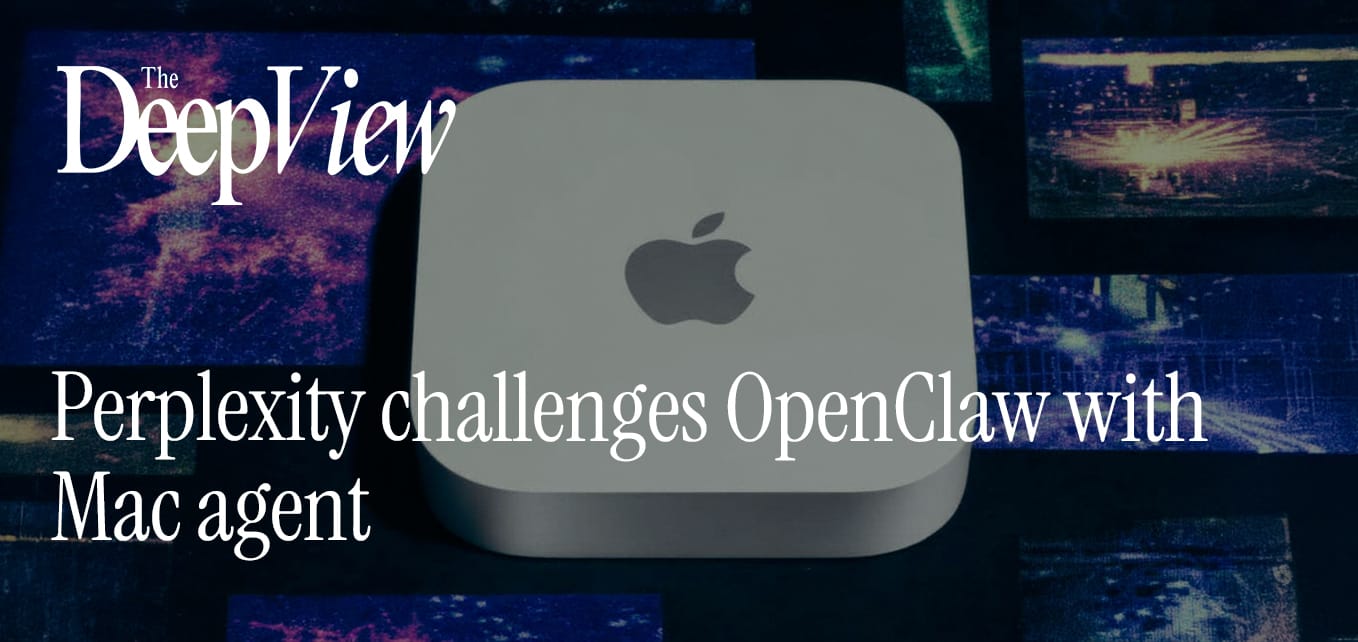
Perplexity challenges OpenClaw with Mac agent

I already had great first impressions of Perplexity Computer, but now the company is turning the product into a full-on OpenClaw competitor.
On Wednesday, at its first developer day event, Perplexity announced Personal Computer, which turns the product from a browser-based agent into a 24/7 proactive AI running on a Mac mini. (These agents are driving more revenue for Apple than any company in the AI ecosystem, but that's a story for another day.)
The big difference with the new product is that its agents can directly use local files and apps, while the Computer browser agent is limited to cloud data and cloud services. It can now act like a digital worker operating on a dedicated machine.
You can describe an outcome you're looking to achieve in natural language, and then Perplexity's agent can break it into subtasks and now carry them out on the Mac by browsing folders, reading and editing documents, and coordinating apps. Meanwhile, it prioritizes safety by giving you a kill switch, letting you manage permissions, and logging all the agent's activities so you can audit them. It will also let you query the agent from any device, a flagship feature of OpenClaw.
When asked about the difference between Perplexity's new agent and OpenClaw at the company's inaugural developer event, CEO Aravind Srinavas said, "Perplexity Computer is meant for serious people."
The Deep View founder, Faris Kojok, attended Wednesday's developer event and concluded that Perplexity is on the right track.
He said, "If AI is going to become a real computer, it probably needs:
model orchestration
tool use
browser access
memory
long-running execution
secure context across your work and personal environment
He added, "That’s a much bigger shift than 'better chat.' The product worth building is a software [tool] that can actually do the work, not just be an assistant."
There was also plenty of positive chatter about the new product on Twitter, especially comparing it to OpenClaw.
Another important difference is that Perplexity's product is not open-source. That might make it easier to get started, but it will also be less customizable and extensible.
While Perplexity announced Personal Computer on Wednesday, it's not yet available to use. The company simply opened the waitlist. At the developer event, Perplexity also announced enterprise versions of Perplexity Computer and its Comet web browser.

Perplexity revealed details about the internal testing phase of Computer. In four weeks, they calculated that it saved $1.6 million in labor costs and performed the equivalent of 3.25 years of work. That was enough to convince the team they needed to get the product into people's hands as quickly as possible. Led by Claude Code and OpenClaw, personal AI agents are dominating the tech narrative so far in 2026. Perplexity has now rapidly emerged as a key player. As powerful as OpenClaw and Claude Code are, they remain products for engineers. The first teams that bring the benefits of personal AI agents to the broader public will be doing a tremendous service. But it has to be dead simple to use while maintaining strong security and privacy. Perplexity is determined to make a run at it, and they are a step ahead of Anthropic and OpenAI, for now.

TOGETHER WITH TWELVELABS
Search any video with natural language. Now on Amazon Bedrock
Finding specific moments across hours of footage is still painfully manual. Most AI models treat video as a series of frames, but TwelveLabs built two models that understand visuals, audio, speech, and motion together, so you can search hours of footage the same way you'd search text.
It's already being used across security, media, and enterprise workloads at petabyte scale.
This guide breaks down how it works, what real deployments look like, and how one customer cut highlight creation from 16 hours to 9 minutes.
Get the guide
OPEN SOURCE
Nvidia takes a surprising lead in open-source AI
Nvidia continues to step up its open-source game.
On Wednesday, the company debuted Nemotron 3 Super, a 120 billion parameter open model designed to run complex agentic AI systems. The model features advanced reasoning, a mixture-of-experts architecture, a 1 million token context window and is built to be more efficient, more accurate and faster than its predecessor.
Nemotron 3 Super also outranked several models from OpenAI, Amazon and Google on the Artificial Analysis benchmark, and can be 2.2 times faster than GPT-OSS in reasoning workloads, Bryan Catanzaro VP of applied deep learning at Nvidia, told The Deep View. It’s the second release in the Nemotron family, following the release of Nemotron Nano in December, with a “four times bigger” Ultra model being released soon, he said.
Nvidia’s latest model comes as open models catch an increasing amount of attention, especially Chinese models like DeekSeek and Qwen.
The difference, however, is that Nvidia 3 Super isn’t just open weights, said Catanzaro: it’s open “data and recipes.”
Along with releasing the model itself, the company released the entire methodology for training it, including the pre- and post-training data sets, the training environments and the evaluation recipes.
“The reason why we're doing this is that we're trying to help the ecosystem,” said Catanzaro. “We work with every AI company, small and large, old and young. We know that it's in our interest to help the ecosystem grow, because it creates opportunity for us.”
And Nemotron 3 Super is proving itself in practice, too. CrowdStrike, which had early access to the model, found that it performed three times more accurately than the previous model it was using in production and performed exceptionally well on internal benchmarks for threat hunting, Sven Krasser, chief scientist at CrowdStrike, told The Deep View.
“We're very excited that something with these capabilities is out there in the open to use,” Krasser said.
These models may just be the beginning of Nvidia’s contribution to the open source ecosystem. According to Wired, Nvidia intends to spend $26 billion on building open models over the next five years, further entrenching the company into the open model ecosystem.
What goes around, comes around. As Catanzaro said, feeding the ecosystem is a long-haul investment for Nvidia. As the hardware provider of choice for AI companies, creating one of the most open and flexible models in the ecosystem aligns better with its long-term business goals than it does for Meta, OpenAI or other open model providers in the US. The more Nvidia supports the open-source AI ecosystem, the more companies will customize models for their use cases and boost their AI use, in turn creating more Nvidia customers. Nvidia’s bet also feeds the open source market in North America, one that’s particularly lacking as open models from Chinese firms have recently taken the lead.

TOGETHER WITH DESCOPE
Drag & drop auth for customer apps and AI agents
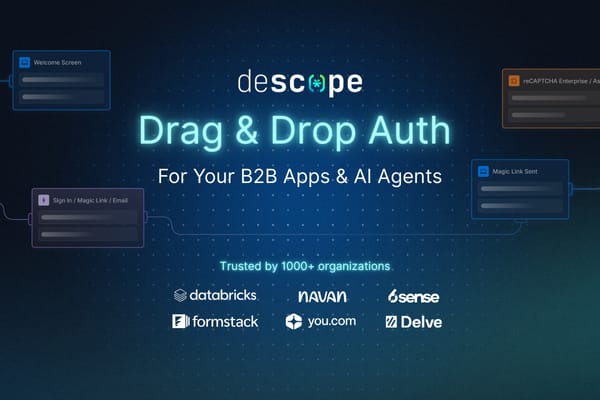
Your engineers are building at warp speed, so why should auth be left behind? Descope provides no / low code workflows that decouple auth, access control, and user management from your app’s codebase so your teams can focus on the core product.
Customers are using Descope to achieve incredible results:
Cequence Security reduced SSO-related support tickets by 90%
You.com shortened customer SSO onboarding times from weeks to 15 minutes
GoodRx migrated tens of millions of users with zero downtime
PRODUCTS
Claude strengthens its Excel, PowerPoint skills
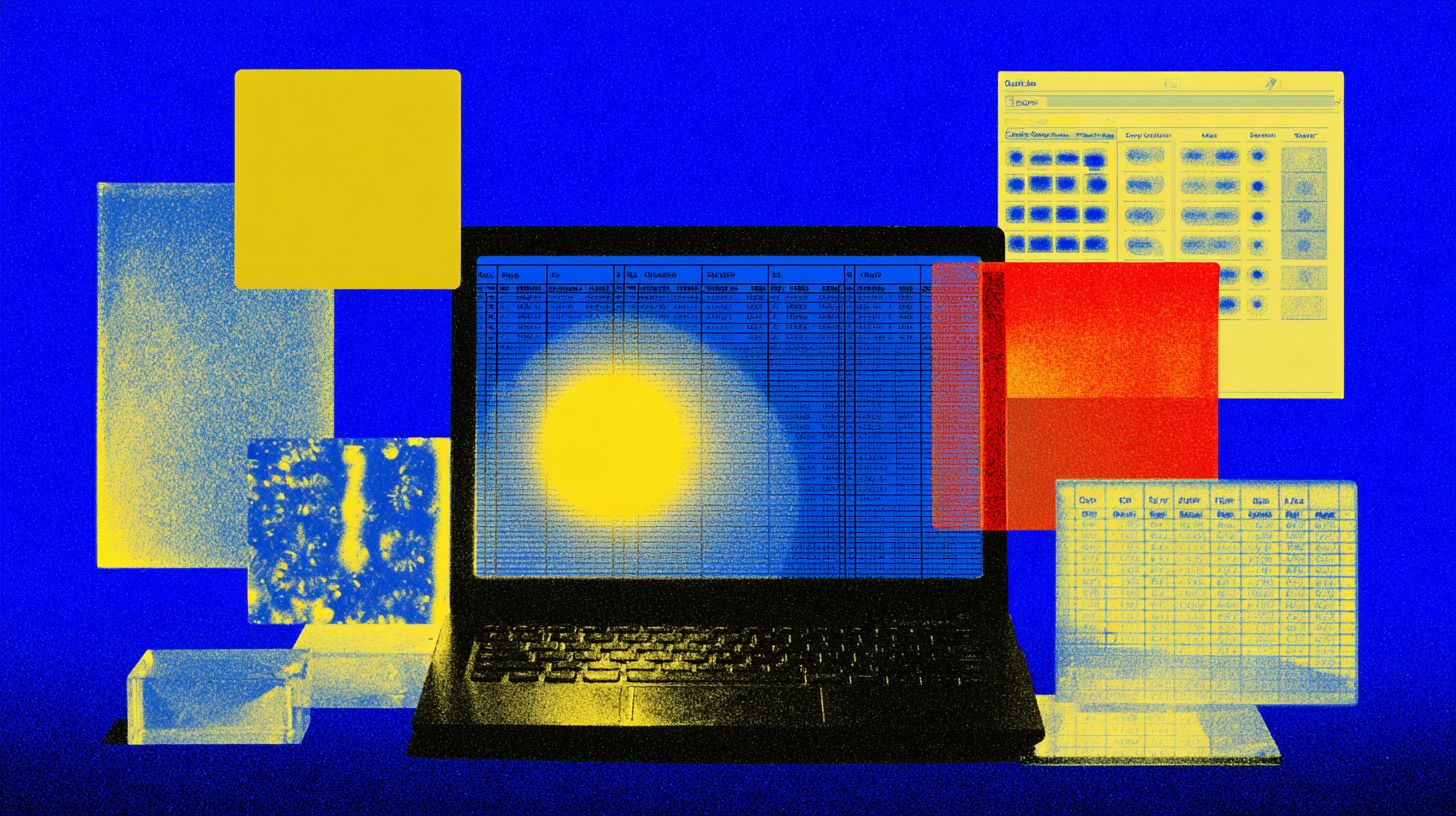
While Anthropic doesn’t offer a productivity suite of apps like Google or Microsoft, it is expanding its integrations with Microsoft 365 applications.
On Wednesday, Anthropic launched updates to Claude for Excel and Claude for PowerPoint, expanding the ways it can assist users and making the connection between them more seamless. For instance, both tools now share the full context of your conversation by understanding the context of open files and carrying it across apps.
Anthropic suggests a use case for that feature would be a financial analyst having Claude pull company financials, then use those to build a trading compass table in Excel, and ultimately drop the summary of those findings into the pitch deck without switching tabs or re-explaining the information you already fed it.
The Skill feature, which allows users to create reusable, shareable workflows, is now also available inside Excel and PowerPoint add-ins. This is especially useful for enterprises that need all slide decks to follow a specific template or use a specific Excel number format. The company is also shipping a starter set that covers the most common Excel and PowerPoint use cases.
Lastly, organizations can now route traffic from the Claude add-ins through an existing LLM gateway to Claude models running on Amazon Bedrock, Google Cloud's Vertex AI, or Microsoft Foundry. This is particularly valuable for enterprise users whose compliance or security requirements already tie them to one of these cloud platforms.
The improved Claude for Excel and Claude for PowerPoint context-sharing experience will be available for all Mac and Windows users on paid plans in beta starting today. Skills and cloud platform deployment are also available starting today.
Anthropic largely appeals to risk-averse enterprises because of its safety and privacy policies, the absence of public scandals, and, perhaps most importantly, a wide array of tools that cater to working professionals. This update showcases just that: Anthropic knows who its target audience is and continues to ship features that benefit them. Overall, it remains a smart play that is delivering results, as CEO Dario Amodei reported that 80% of Anthropic’s business comes from enterprises and only 20% from consumers. While Google released similar tools in its Workspace app this week, Microsoft 365's is more geared towards high-expertise professionals, giving Anthropic's Excel and PowerPoint add-ins a more natural home.

LINKS

Anthropic launches think tank dedicated to AI societal impact
Microsoft in talks to lease Texas data centers after Oracle left
AI security startup Kai raises $125 million in combined seed, Series A round
Meta unveils four new chips to deploy by 2027 for AI features
Superhuman disables Grammarly’s AI-powered Expert Review feature
Netflix to pay as much as $600 million for Ben Affleck’s AI film company
Zoox, Uber partner on autonomous vehicles in Las Vegas
Atlassian lays off 1,600 workers as it shifts to AI

Canva: The design platform introduced Magic Layers, an AI tool that can take a static image and convert it into a multi-layered design inside Canva.
Replit: The software development platform was introduced Replit Agent 4, whose updates include building with team in real time, parallel agents, and more.
Google Photos: The app was updated to allow users to switch between classic results and Ask Photos, its AI-powered image search feature.
Claude: Anthropic’s chatbot now has deeper integrations in Microsoft PowerPoint and Excel.
Quizlet: The learning tool launched a native app in ChatGPT to deliver study materials to students, leveraging its library of hundreds of millions of study sets.

Amazon Web Services: Sr. Applied Science, AWS Agentic AI
Salesforce: Senior/Lead Applied Scientist, Responsible AI
Google DeepMind: Research Engineer, Media Integrity
SAP: Senior AI Research Developer

POLL RESULTS
Have you tried Anthropic's Claude for the first time in the past two weeks?
Yes (29%)
No (58%)
Other (13%)
The Deep View is written by Nat Rubio-Licht, Sabrina Ortiz, Jason Hiner, Faris Kojok and The Deep View crew. Please reply with any feedback.

Thanks for reading today’s edition of The Deep View! We’ll see you in the next one.

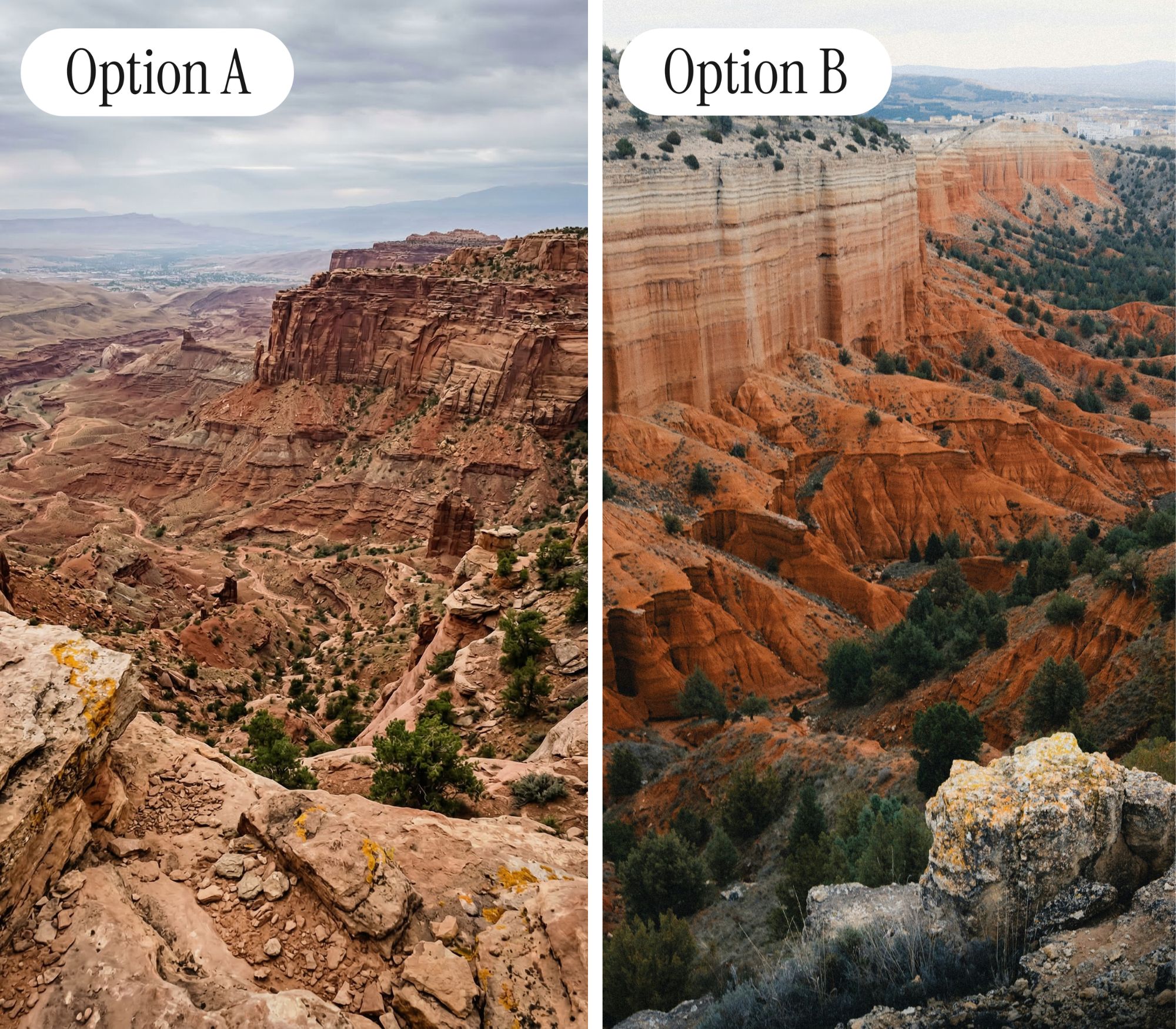
“I look for things that don't belong to determine what is real. [In this image] there is a large orange object that AI would not bother adding.” “My team and I discussed yesterday's pic (the cows) and realized that a year ago, the main AI giveaway was processing artifacts and imprecision; now it's excessive precision and lack of naturalistic detail. A coworker with a photography hobby pointed out the subtle but improbable light in the [other image].” |

“The reflection on [this image] is too consistent across the water and ledge, when it should be slightly offset.” |


Take The Deep View with you on the go! We’ve got exclusive, in-depth interviews for you on The Deep View: Conversations podcast every Tuesday morning.

If you want to get in front of an audience of 750,000+ developers, business leaders and tech enthusiasts, get in touch with us here.