- The Deep View
- Posts
- Research finds AI is ready to displace jobs
Research finds AI is ready to displace jobs

The Deep View
December 01, 2025


Welcome back. DeepSeek is beating out mathletes. The Chinese AI firm’s new model, DeepSeekMath-V2, scored gold medal results at this year’s International Mathematical Olympiad. The model scored 118 out of 120 points in the competition, beating the best human result of 90 points. The model’s success at being a nerd signals that Chinese AI efforts are quickly catching up to US competition, as OpenAI and Google DeepMind report that their own models also scored gold medal status at solving. International Mathematical Olympiad problems this year.
1. Research finds AI is ready to displace jobs
2. AI crunches the memory chip market
3. The muddy waters of child safety and AI
RESEARCH
Research finds AI is ready to displace jobs

AI might already be good enough to do your job.
A study from MIT released last week found that AI is already capable of replacing around 11.7% of the U.S. labor market, accounting for $1.2 trillion in wages.
Using a labor simulation tool called the Iceberg Index, MIT and Oak Ridge National Laboratory researchers tested how 151 million workers are currently affected by AI, mapping 32,000 skills across more than 900 occupations in 3,000 counties. The findings showed that, while roles in tech are most severely exposed to AI, positions across HR, logistics, finances and administration are also exposed.
It’s not the first time researchers have read the tea leaves on how AI is going to impact the job market.
Data published last week by McKinsey found that AI and robotics could automate activities accounting for 57% of US work hours.
And in July, Microsoft researchers published findings detailing the top 40 occupations that are most exposed to generative AI, with positions like historians, sales representatives, translators, technical writers and data scientists facing high risk.
Amid the debate on just how capable AI is at doing the jobs of humans, many companies have already started workforce reductions: Last week, HP announced that it would cut around 6,000 employees by 2028 as part of its plan to streamline work and increase AI adoption, particularly in product development, internal operations and customer support.
In September, Lufthansa announced 4,000 job cuts as it leaned into AI, primarily focused on administrative roles, and Fiverr laid off 30% of its staff as part of its transition into an AI-first company. Klarna, Salesforce and Accenture have all slashed thousands of staff due to automation and an inability to reskill certain employees.

While executives are increasingly gung-ho on the prospect of AI automation, that excitement is matched by rising tension from workers themselves. Data from KPMG released last week finds that 52% of workers now fear job displacement, nearly double the percentage reported the previous year. For AI adoption to work, enterprises need to find a sweet spot: Using agents to fill the tedious work that people actually hate, while upskilling their employees into more meaningful roles that require a human touch.
TOGETHER WITH IBM
Start small, then scale for AI success

AI-ready data is essential for reliable performance and scalability. High-quality data is the foundation of smarter AI and helps you deliver measurable value at scale. Start small and scale strategically for incremental wins that create lasting impact.
Your trusted, high-quality data
Both structured and unstructured data
Seamless integration across sources
Watch the AI Agents Run on Data—Is Yours Ready? webinar to learn how implementing AI built on a foundation of AI-ready data lets you start small and scale with your business.
HARDWARE
AI crunches the memory chip market

The AI race is putting a premium on memory chips.
Chip firm Micron is investing more than $9 billion in building a facility in Japan to produce next-generation memory chips for AI, Nikkei Asia reported on Saturday. The move reportedly aims to diversify Micron’s production into another core piece of AI chips.
Micron will start building the plant in May of 2026 and is targeting delivery in 2028.
The move comes amid growing demand for all components of AI infrastructure amid a historic buildout of data centers worth upwards of a trillion dollars. The demand for one kind of memory chip – high-bandwidth chips more capable of the complex workloads that AI requires – could cause a domino effect that impacts the production of more common ones.
As chip firms shift their focus to high-bandwidth chips, Dell and HP are among the tech companies warning of a potential shortage in memory chips over the next year, potentially skyrocketing the cost of a large swathe of devices such as phones and laptops.
Dell COO Jeff Clarke noted in a call with analysts last week that “the cost basis is going up across all products,” and HP CEO Enrique Lores told Bloomberg that the company expects a crunch later in 2026 and will raise costs if necessary.
The potential deficit highlights the knock-on effects of the AI industry's craving to stand up these resource-intensive server farms: Practically every part of the supply chain stands to be impacted, from chips themselves to the components that create them, to the energy and water it takes to keep these facilities running once they’re built.
TOGETHER WITH FLORA
Are bad tools holding your creative process back?
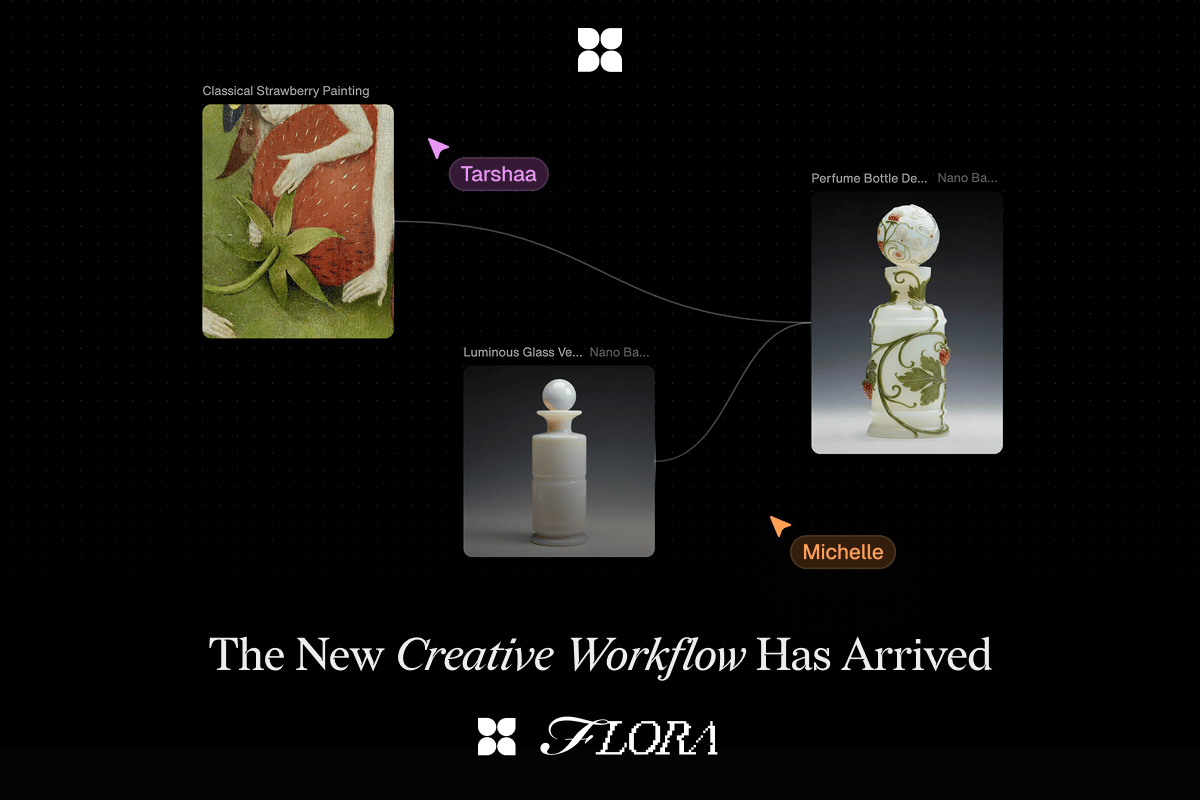
Most AI tools feel like simple shortcuts, when what your creative process really needs (and deserves) is craft... which is where FLORA comes in.
This AI-native canvas allows you to design campaigns, concept storyboards, and create full visual worlds, all in one convenient and organized place. No juggling apps, no messy exports, no subpar shortcuts -- just pure creative flow.
Used by design firms like Pentagram, premier studios like Little Plains, and in-house brand teams at Levi’s, FLORA is quickly becoming the new standard for storytelling.
POLICY
The muddy waters of child safety and AI

The relationship between AI chatbots and young users just keeps getting more complicated.
Last week, OpenAI defended itself in a lawsuit accusing its flagship chatbot ChatGPT of prompting a 16-year-old Adam Raine to kill himself, claiming the chatbot urged him to seek help more than 100 times. According to a court filing, OpenAI notes that Raine told the chatbot he had shown "multiple significant risk factors for self-harm” for years prior to his use of ChatGPT.
The Raine family’s lawsuit is just one example of a slew of cases against AI firms alleging responsibility for the suicides of young users. As these cases rise and an increasing number of young people turn to chatbots for companionship, some firms have implemented guardrails:
In September, OpenAI implemented a number of parental controls for ChatGPT to limit certain content and detect signs of self-harm.
Character.AI, which has been the center of multiple legal battles alleging responsibility for teen suicides, is winding down the ability for under-18 users to engage in open-ended chats with its platform, instead announcing a feature last week for interactive fiction called “Stories.”
Still, while these platforms have implemented support for suicide and acute distress in the wake of these cases, research has shown that these systems tend to fail when faced with discussions of other conditions, such as anxiety, depression, ADHD, eating disorders, mania and psychosis.
It begs the question of whether guardrails and safety features are enough to prevent significant harm, and whether the slow pace of regulation can keep up with the rapidly evolving nature of these AI systems.
LINKS

Anthropic CEO Dario Amodei asked to testify on Chinese AI cyberattack
SF Compute raises $40 million for offtake marketplace
Anthropic research finds effective ways to harness agents for long context windows
Reliance, Brookfield, Digital Realty invest $11 billion in AI data center in India
AI financial planner Range raises $60 million
Alibaba releases Quark 1 smart glasses with built-in Qwen AI

Perplexity Newswire: Perplexity’s finance product now includes a real-time newswire for coverage of market developments.
WarpGrep: A subagent that improves coding agent performing, providing 40% faster speeds and cutting context rot by 70%.
Tsk.lol: A customizable, cozy open-source task manager.
Agenta: An open-source LLMOps manager for building apps you can rely on.



POLL RESULTS
How do you plan to use AI for holiday shopping this year?
To find deals and compare prices (25%)
For gift inspiration and discovery (19%)
To make purchases directly through a chatbot (16%)
I'm not using AI for shopping (40%)
The Deep View is written by Nat Rubio-Licht, Faris Kojok and The Deep View crew. Please reply with any feedback.
Thanks for reading today’s edition of The Deep View! We’ll see you in the next one.

“The variety of dinner roles seems unrealistic to me.” “There seems to be an anomalous foot in the fake image. I also didn't really buy the rustic table as a setting for such a refined meal.” “What is with all the rosemary? The fake picture had full plates, but none of the dishes were missing any food.” |

“Whoa! The turkey in the real one just didn't look right!” “The candied sweet potatoes looked more real.” “This was a pure guess. Couldn’t see any obvious faults in either of them.” |


Take The Deep View with you on the go! We’ve got exclusive, in-depth interviews for you on The Deep View: Conversations podcast every Tuesday morning.

If you want to get in front of an audience of 450,000+ developers, business leaders and tech enthusiasts, get in touch with us here.