- The Deep View
- Posts
- Sonnet 4.6: Anthropic goes beyond techies
Sonnet 4.6: Anthropic goes beyond techies

The Deep View
February 18, 2026


Welcome back. Anthropic is pushing its best AI beyond the developer. With Sonnet 4.6, many of the capabilities of its flagship Opus model (coding, agents, and problem-solving) are now available at a lower price. But the big move is Anthropic targeting the use of its new model to check everyday tasks off your to-do list. At the same time, open models are rapidly gaining ground as Moonshot targets a $10B valuation and closes the gap on the proprietary labs. Within companies, developers are evolving from creative coders to AI orchestrators, reviewing machine-generated work created in a fraction of the time.
—Jason Hiner
1. Sonnet 4.6: Anthropic goes beyond techies
2. Open models accelerate as Moonshot targets $10B
3. The rise of developers as AI managers
PRODUCTS
Sonnet 4.6: Anthropic goes beyond techies

Anthropic models continue to grow in popularity among AI enthusiasts. Now, the latest upgrade from Anthropic gives existing users a better deal and gives regular folks new reasons to try AI.
On Tuesday, Anthropic rolled some of its latest capabilities into its less expensive mid-tier model, Claude Sonnet. With the launch of Sonnet 4.6, Anthropic has brought many of the latest AI superpowers from its flagship model, Opus 4.6, into its mid-tier option.
But the real story is two-fold:
First, a lot of the latest strengths from Opus 4.6 (coding, working with agents, better accuracy, and searching big data sets) are now available at 40% discount to the price for Opus tokens. However, Opus is still better at deep reasoning and solving the most difficult and ambiguous problems.
Second, Anthropic is now pushing Sonnet 4.6 as the technology that can do more than help developers debug their websites, offering everyone agents to help power through their to-do lists. For example, the Sonnet 4.6 launch video shows the Claude agent using the technology to renew a car registration, file an expense report, update a presentation, and reschedule a delivery date.
Companies like Box that have been testing Sonnet 4.6 have reported strong real-world benefits:
If you're confused by all of the different names of the Anthropic AI models, then here's a quick refresher. There are always three tiers, and the names themselves are a dead giveaway for the differences, since they are based on literary metaphors.
Opus: The most powerful and expensive model is for multi-step reasoning, advanced coding, and long-horizon agentic work with complex problems
Sonnet: The mid-tier model is the most versatile and the default option, as it's designed to balance speed, power, and costs; it can handle the most diverse set of tasks
Haiku: This lightweight model is aimed purely at speed and economy and is best for basic question-and-answer queries, summarization, classifying content and lightweight chats

It's encouraging to see Anthropic create an easier interface within its Claude app to allow non-techies to take advantage of the power of AI agents. That's where Claude Cowork comes in, and Sonnet 4.6 feels primed to help regular people do even more with this tool. On the other end of the spectrum are the hardcore AI enthusiasts, represented by the early adopters of OpenClaw. These folks are burning through tokens (and dollars) to keep their personal AI agents doing work for them, often powered by Opus 4.6. They're likely to be thrilled to use Sonnet 4.6 for many of those tasks and save a bunch of money.

TOGETHER WITH TELEPORT
Scale AI Across the Org Without Breaking Anything

As AI agents take on autonomous tasks across infrastructure, identity becomes a critical dependency. Legacy identity systems built for humans and static workflows struggle to keep up with non-human actors operating at machine speed.
To scale agentic AI responsibly, teams need identity that is dynamic, auditable, and purpose-built for autonomous systems.
Teleport just announced a framework that breaks down what AI-ready infrastructure requires:
Short-lived, non-human identity
Clear provenance and auditability
Policy-based access for agentic workloads
STARTUPS
Open models accelerate as Moonshot targets $10B

Open source AI might be catching up to its proprietary rivals.
Chinese AI firm Moonshot, the developer of the Kimi open source model family, is reportedly targeting a $10 billion valuation in an expansion of its current funding round, according to Bloomberg.
The company raised $500 million at a $4.3 billion valuation last month. The round’s existing backers include Alibaba, Tencent and 5Y Capital, which have already committed more than $700 million to the company.
And Moonshot isn’t the only company seeing open source success. Last week, Paris-based Mistral AI, which provides a suite of open-source models, announced a $1.4 billion commitment to AI data centers in Sweden as it hit an annualized revenue run rate of more than $400 million. The company had raised roughly $2 billion at a more than $13.8 billion valuation in September.
Adoption of these models, too, are starting to pick up pace, with Alibaba’s Qwen model family raking in hundreds of millions of downloads on Hugging Face.
Still, these figures are drops in the bucket next to the high-flying valuations of US-based proprietary model developers, with OpenAI eyeing an $830 billion valuation in its upcoming twelve-figure funding round; Anthropic hitting $380 billion after its $30 billion round; and xAI sitting at upwards of $230 billion prior to its acquisition by SpaceX.
However, money might not be everything. Scott Bickley, advisory fellow at Info-Tech Research Group, told The Deep View that these valuations are more a function of structural economic differences, rather than being indicative of model performance.
That difference is geopolitical: The US relies on massive companies to push frontier AI research via capital concentration, he said.
Meanwhile, China – where most of the open source AI development is concentrated – favors a large swathe of small companies to conduct research cheaper, said Bickley.
“This valuation gap belies the fact that open-source models are rapidly closing the intelligence gap,” Bickley told The Deep View.
Though there is a common notion that open-source AI still lags behind proprietary competitors, the race may no longer be who can make the most performant AI model, but rather it’s a “race to the bottom,” said Bickley, the winner being the lab that can make the AI model that’s most efficient and affordable. But the benefits of open-source go beyond being cheap: Open ecosystems promote and democratize collaborative innovation, if developers can find ways around the lack of safeguards and security issues that these models tend to pose.

TOGETHER WITH BRIGHT DATA
Stop rebuilding your data pipeline.

Prototypes can survive messy data. Production AI can’t.
Real impact starts when your data pipeline can pull structured web data reliably without unstable scrapers, constant maintenance, or proxy management.
Bright Data’s Scraper APIs provide production‑grade, ready‑made endpoints across ecommerce, social, travel, and finance for any use case from product and pricing intelligence to listings, availability, reviews, posts, and more.
WORKFORCE
The rise of developers as AI managers
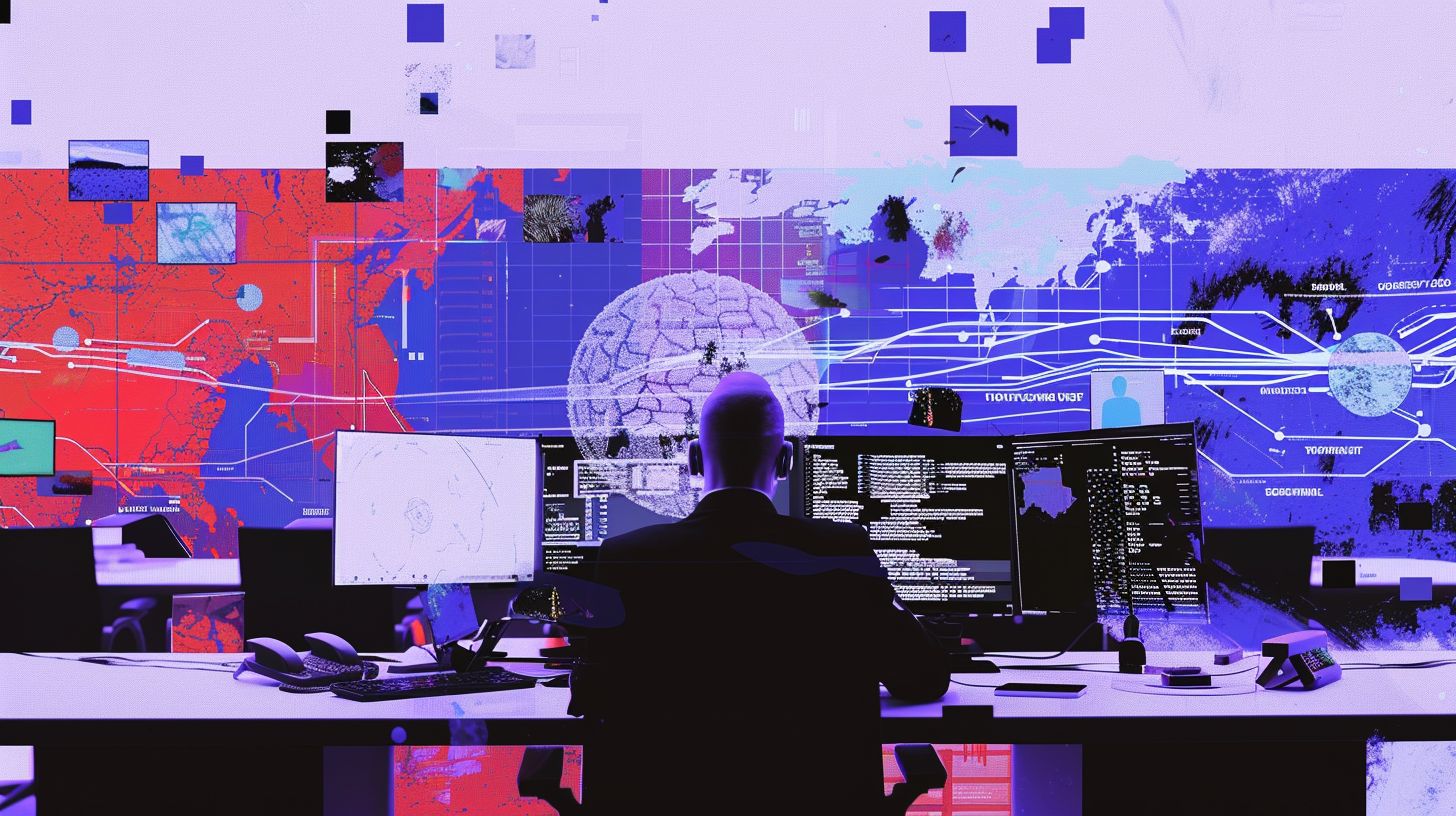
When AI can create apps from simple prompts, many developers are left wondering what to do with their time.
The tech’s ability to generate practically anything in the digital domain has triggered a number of questions about how these capabilities will change the way tech workers, well … work. Coding tools like Claude Code have entirely automated something that once required a fleet of eager college grads to complete.
The result? Developers are becoming managers, rather than creators. And executives are eating it up:
Canva’s CTO Jesal Gadhia told Business Insider that most of the company’s senior engineers spend their time reviewing AI-generated code, rather than writing it themselves. As a result, they’ve produced an “unprecedented amount of code” in the last 12 months.
Meanwhile, Spotify co-CEO Gustav Söderström said in the company’s recent earnings call that its most talented developers haven’t handwritten “a single line of code since December.”
And Dan Cox, the CTO of Axios, said that the company used AI agents to complete a project in 37 minutes that took one of its best engineers three weeks to complete the previous year.
While this might be fine for senior developers, the question remains of how this will impact the green coders who are just entering the workforce, especially amid the plethora of mixed signals on how AI is impacting the job market.
Some estimates paint a bleak picture: According to data from the Federal Reserve Bank of New York analyzing the degrees with the highest unemployment rate, computer engineering and computer science ranked in the top five, at 7.8% and 7%, respectively.
Others, however, point to AI transforming certain jobs, rather than completely killing them. A Gartner study, for instance, said that 50% of the workers laid off as a result of AI will be rehired to do similar work. It’s a sentiment that IBM is taking into its own hiring practices as it plans to triple entry-level headcount, but shift focus away from technical tasks that AI can do to instead have these staffers focus on person-to-person jobs that need human skills.
An argument can be made that creation requires humanity. Art, music, literature: these are things that are born as a result of channeling the human experience into an artistic medium so that we can relate to one another. But that argument is a little more difficult to make for technical skills like coding. As these systems become more capable of doing technical work, human creation might become more valuable. As Daniela Amodei said in a recent interview with ABC News: “In a world where AI is very smart and capable of doing so many things, the things that make us human will become much more important."
LINKS

Meta, Nvidia strike multi-billion dollar deal for AI chips
Researchers call for guardrails on infectious disease datasets for AI
Google strikes deal with Ormat for 150MW of geothermal energy
Mistral acquires Koyeb, a startup for AI deployment and management
Palantir relocates its headquarters from Denver to Miami
Cloud startup Render raises $100 million at $1.5 billion valuation
Open source firm Temporal raises $300 million at $2.5 billion valuation

Wordpress AI Assistant: Wordpress has added a built-in AI helper, designed to work inside websites to understand content and layouts.
Manus Agents: Access Manus directly in your messaging apps, starting with Telegram.
Tiny Aya: An open-weight family of multilingual models by Cohere, supporting over 70 languages.
Glimmer: A new design language by Google for user experience design in glasses, prioritizing voice, gesture and eye-tracking.



POLL RESULTS
Have you tried OpenClaw yet?
Yes (8%)
No, but I want to (35%)
No, and I don't intend to (49%)
Other (8%)
The Deep View is written by Nat Rubio-Licht, Sabrina Ortiz, Jason Hiner, Faris Kojok and The Deep View crew. Please reply with any feedback.

Thanks for reading today’s edition of The Deep View! We’ll see you in the next one.

“[This image] has more believable depth of focus.” |

“[This] image looked too narrow and unrealistic.” |


Take The Deep View with you on the go! We’ve got exclusive, in-depth interviews for you on The Deep View: Conversations podcast every Tuesday morning.

If you want to get in front of an audience of 750,000+ developers, business leaders and tech enthusiasts, get in touch with us here.